5 Carat Lab-Grown Diamond Ring: Size, Price and Buying Considerations
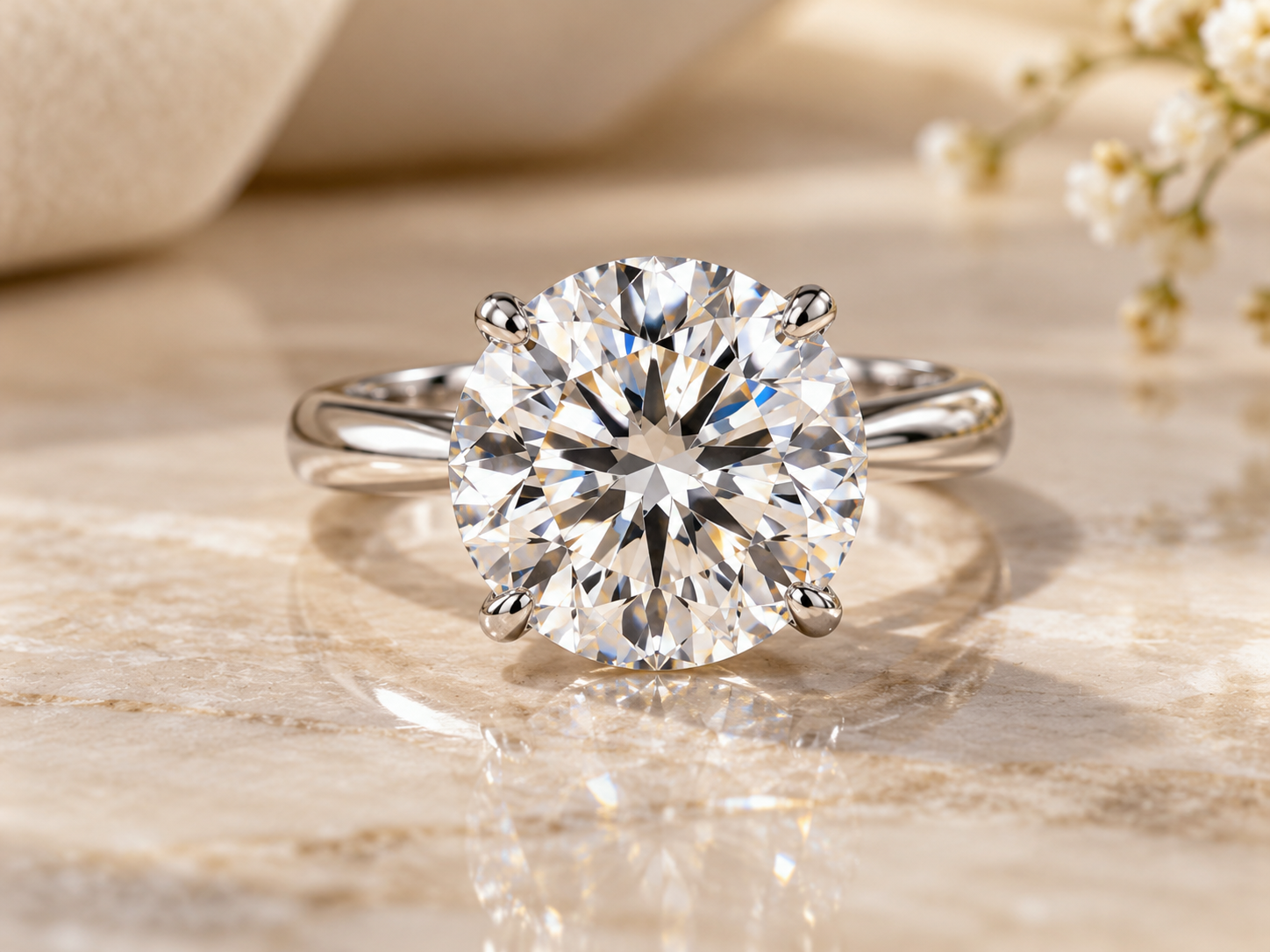

A 5 carat lab-grown diamond is a real diamond, grown in a lab, at a size most people only ever see from a distance. It makes a statement.
Before you buy one, two questions matter more than the carat number itself. What does 5 carat actually look like on your hand? And what should you pay for, versus skip, at this size?
This guide covers the size, the price, and what is worth checking, so a big stone feels like a confident choice.
Quick answer: A 5 carat lab-grown diamond is large, around 11 mm across for a round, and it costs far less than a mined diamond of the same size. At this size, cut and an eye-clean look matter more than the top color and clarity grades.
How Big Is a 5 Carat Lab-Grown Diamond?
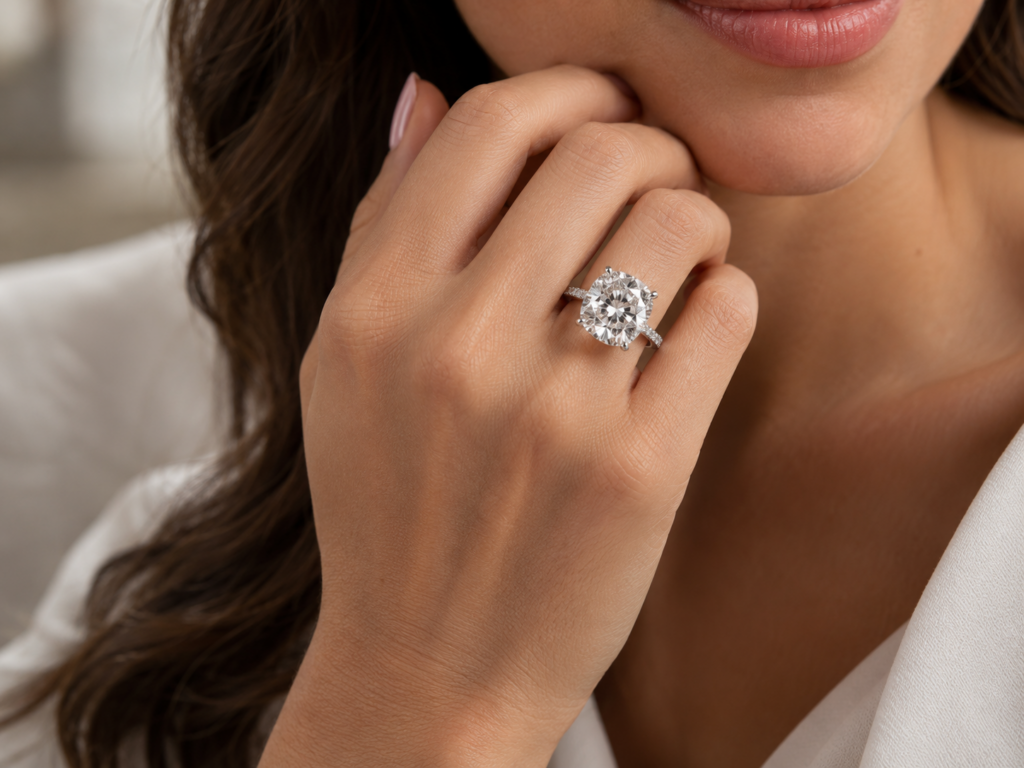
Big. A 5 carat round sits around 11 mm across, roughly double the face-up area of a 1 carat, so it covers a real stretch of finger and draws the eye straight away.
Weight is not the same as the look, though. Elongated shapes such as oval and emerald spread their weight along the finger, so they can read even larger than a round of the same carat.
Approximate face-up size by shape:
| Shape | Approx. face-up size at 5 ct |
| Round | about 11 mm across |
| Oval | about 14 x 9.5 mm |
| Emerald | about 11 x 8 mm |
| Cushion | about 10 mm across |
These are rough guides. Measurements shift with the cut, so it helps to see how a carat size actually looks on the hand before you commit. Check the millimeter dimensions on the report, not only the carat weight.
Why Do Two 5 Carat Diamonds Cost Such Different Amounts?
At this size, price is driven far more by the 4Cs, the cut quality, and the shape than by the carat number on its own. A 5 carat lab-grown center stone can range from a few thousand dollars to well over ten thousand.
Two stones at the same weight can sit far apart on price. One may be cut better, or graded higher.
Cut is where the money shows. A well-cut stone returns more light and looks more alive on the hand, while a poorly cut one can look a little dull and lifeless even at a full 5 carat.
The same pattern holds at smaller sizes, which is why how size and price change between a 2 and 3 carat is useful background. When you start to compare 5 carat options in the rings collection, line up like with like, because a lower price is not a better deal if the cut, the grades, or the measurements are not the same.
What Should You Check Before Buying a 5 Carat Stone?
Cut first, then a stone that looks clean to your eye, then the report.
At 5 carat you do not automatically need the top color and clarity grades. The catch? A larger stone shows its inclusions and its body color more readily than a 1 carat, so the honest move is to look at the actual diamond rather than chase the highest numbers on paper.
A few things worth checking before you buy:
- The stone looks clean and bright to your own eye, not only on paper.
- The cut grade is strong, since cut drives how a 5 carat actually looks.
- The report matches the diamond, and you can verify the report number.
- You know which lab issued the report, and what it contains.
A higher grade is only worth paying for if you can see the difference. At 5 carat, that money often does more in the cut.
That last point about the lab matters more than it used to. GIA changed its updated lab-grown reports in October 2025 and now describes some lab-grown diamonds as “Premium” or “Standard” rather than the familiar D-to-Z grades, while IGI reports still list the 4Cs and the stone’s origin (the line that confirms a stone is lab-grown, not mined).
Candor grades every diamond independently, and you can confirm which lab issued the report and what it covers before you buy.
Which Settings Suit a Stone This Large?
A 5 carat center needs a setting that holds it securely and balances its height. A few that tend to work well:
- Solitaire. Keeps all the attention on the stone.
- Hidden halo. Adds a little lift and side sparkle without changing the clean look from above.
- Three-stone. Spreads the presence across your finger.
A higher setting adds drama, but it sits taller, which you feel in daily wear (anyone who has caught a tall ring on a coat sleeve knows the feeling). A lower or bezel-leaning profile trades some height for a steadier everyday ring.
There is no single right answer here. Match the setting to how you actually live, not only to how it photographs.
Is a 5 Carat Ring Practical for Everyday Wear?
Yes, with realistic expectations.
A stone this size is noticeable, it sits higher than a smaller one, and you will be more aware of it on your hand through the day. That is part of the appeal.
It also means the setting and the upkeep matter a little more:
- Secure prongs, checked now and then so nothing works loose.
- Some care around tasks where a tall ring can snag.
- A profile you are comfortable wearing every day.
If you want a large look with less fuss, weigh the profile and the setting now, rather than after the ring is made.
FAQs
Is a 5 carat lab-grown diamond real?
Yes. A lab-grown diamond has the same chemical and optical properties as a mined one, and the only difference is origin. Sellers have to say so too: the FTC requires sellers to disclose that a diamond is laboratory-grown, so the listing should state it clearly.
How much is a 5 carat lab-grown diamond ring?
It varies widely, from a few thousand dollars to well over ten thousand, depending on the cut, the 4Cs, the shape, and the setting. Set your budget first, then compare the strongest combinations within it.
Does a 5 carat lab-grown look fake because it is so big?
No. Size does not make a diamond look fake. A well-cut one looks like what it is, a large and bright diamond.
What quality should I choose for a 5 carat?
Lead with cut, then pick a stone that looks clean to your eye. You do not need the highest color and clarity grades if you cannot see the difference they make.
Is a lab-grown 5 carat cheaper than a natural 5 carat?
Generally yes, and often by a wide margin at this size. That is usually why buyers consider one in the first place.
Comparing 5 Carat Options
At 5 carat, the differences between stones are easier to judge in person than on a spec sheet. The most useful next step is seeing a few side by side.
Candor cuts and polishes its diamonds in-house and grades every stone independently, which makes those comparisons clearer. When you are ready, compare individual stones with a Candor gemologist and bring any report numbers you want checked.