Are Lab-Grown Diamond Engagement Rings Made With Real Diamonds?

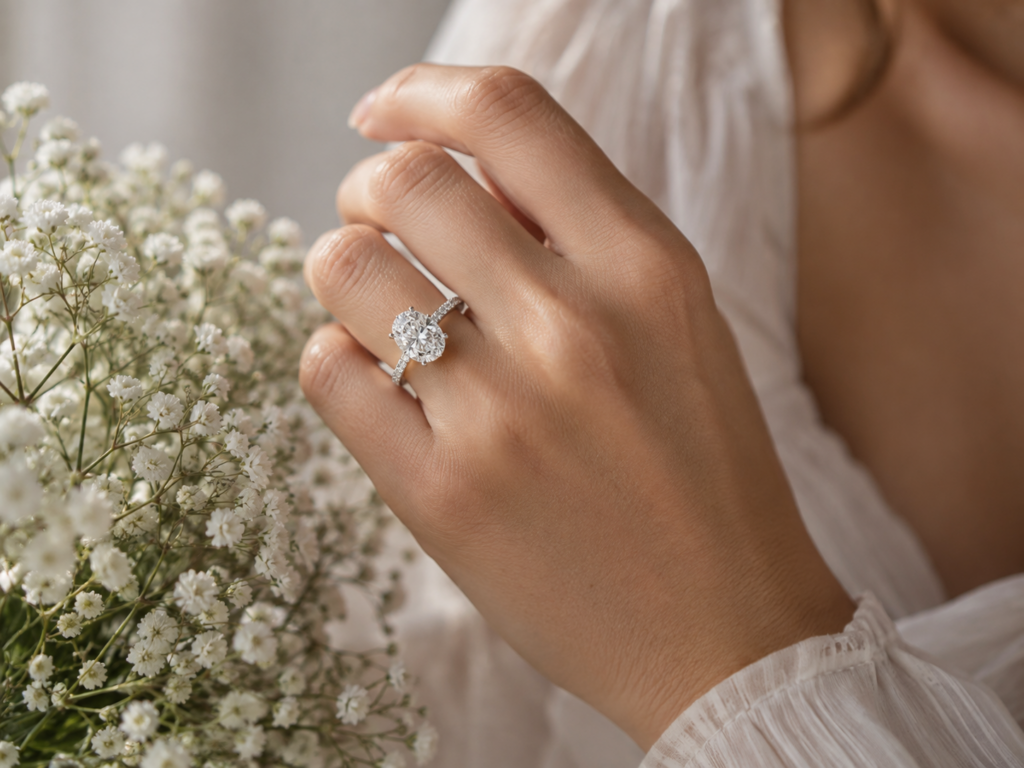
Yes, those are real diamonds. They are chemically, structurally, and physically identical to naturally mined diamonds.
The confusion actually starts with the terms used to describe them. You may see lab-created, lab-grown, and simulated in the same conversation, but they don’t all mean the same thing.
If you’re shopping for an engagement ring, knowing that difference can save you from comparing things that aren’t actually the same.
What Makes A Lab-Grown Diamond A Real Diamond?
A lab-grown diamond is made of the same thing as a natural diamond: carbon. The atoms are arranged in the same crystal structure, which gives both types of diamond the same hardness and basic optical properties.
That’s why “lab-grown” doesn’t mean imitation. The diamond itself is real. The difference is its origin.
Natural diamonds form deep inside the Earth. Lab-grown diamonds are grown in a controlled setting with technology that creates the conditions needed for a diamond to form.
You can also check the diamond’s grading report. Labs such as the Gemological Institute of America and the International Gemological Institute provide grading information for laboratory-grown diamonds.
Is A Lab-Grown Diamond The Same As Moissanite Or Cubic Zirconia?
No. Moissanite and cubic zirconia are popular diamond alternatives. They can be used in engagement rings and can look quite convincing, but neither one is a diamond.
Here’s how they compare:
| Stone | Is it a diamond? | What makes it different? |
| Lab-grown diamond | Yes | Grown in a controlled laboratory |
| Natural diamond | Yes | Formed naturally in the Earth |
| Moissanite | No | A different gemstone made with silicon carbide |
| Cubic zirconia (CZ) | No | A diamond simulant made from zirconium dioxide |
That is also why the FTC distinguishes laboratory-created diamonds from imitation stones.
Imitation gemstones can look similar to diamonds, but they’re made from different materials, such as glass or plastic. They may look similar, but they aren’t diamonds.
Can You Tell The Difference Between The Two?
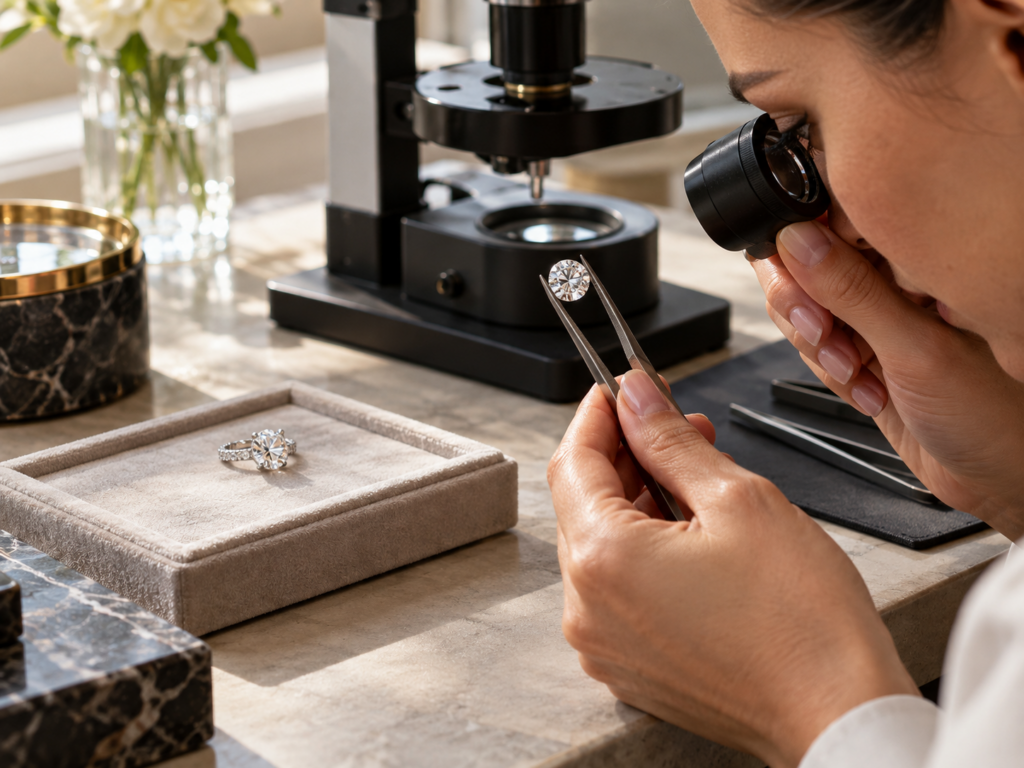
Not really. Their chemical and optical properties are so similar that looking at the stone alone isn’t a reliable way to tell which one it is.
GIA notes that even traditional gem testing and older diamond detectors cannot always tell them apart. Professional laboratories use more advanced testing to establish the diamond’s origin.
The same is true for a basic diamond tester. It can tell you that a stone has the properties of a diamond, but it cannot tell you where it came from.
You need more detailed testing to find that out.
How Can You Confirm That A Diamond Is Really Lab-Grown?
If you’re buying a lab-grown diamond, check the grading report before you buy.
Look for:
- the grading lab
- the report number
- confirmation that the diamond is lab-grown
- details that match the diamond you’re buying
You can also use the report number to check the report with the grading lab. IGI’s online verification tool lets you enter the report number and look it up.
Are Lab-Grown Diamonds Durable Enough For An Engagement Ring?
For a ring you plan to wear every day, a lab-grown diamond holds up just as well as a natural one.
What usually needs more attention is the ring itself. Prongs can loosen, the band can pick up scratches, and the setting may take a few knocks.
So when you’re buying an engagement ring, look at the whole ring, not just the diamond.
Frequently Asked Questions
Are lab-grown diamonds fake?
The “lab-grown” label only describes where they were created. They are real diamonds, made from carbon and sharing the same core properties as natural diamonds.
Can a diamond tester tell if a diamond is lab-grown?
A basic tester can confirm that you’re holding a diamond, but it can’t tell you where it came from. For that, you need a proper grading report or advanced lab testing.
Are they the same as moissanite?
Moissanite can look diamond-like, but it is a different gemstone made from silicon carbide. Lab-grown diamonds are made from carbon.
Are lab-grown diamonds the same as cubic zirconia?
Cubic zirconia is a diamond lookalike made from zirconium dioxide. A lab-grown diamond is not a substitute stone; it is an actual diamond.
Will someone be able to tell my engagement ring is lab-grown?
Not just by looking at it. The stone can look very much like a natural diamond. More detailed testing is needed to determine its origin.
Choose A Lab-Grown Diamond With Proof Behind It
Knowing that these diamonds are real is one thing. When you are buying one, you also want to know exactly what you are getting.
At Candor Diamonds, our lab-grown diamonds are independently graded by GIA and IGI so that you can check the diamond’s details through the grading report.
We also cut and polish our diamonds in-house and make our jewelry through our own workshops.
Explore our collection of certified lab-grown diamond engagement rings.