Custom Lab-Grown Diamond Rings: A Step-by-Step Buying Guide
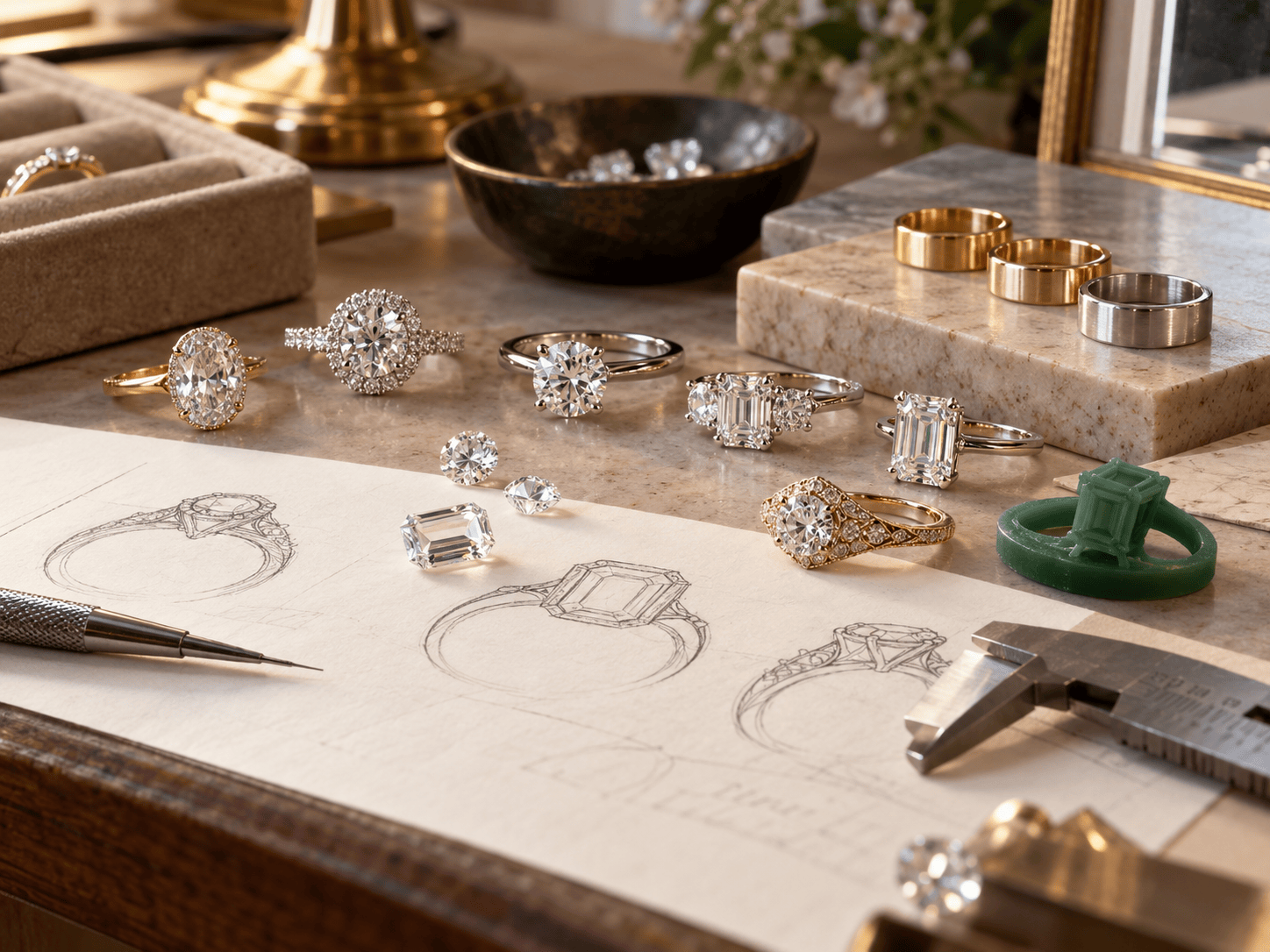

A custom ring means the design starts with you rather than with a case of finished pieces. You choose the diamond, the setting and the metal, and the ring is built around them.
With a lab-grown diamond, custom is easier on the budget than it used to be, because the stone costs less than a mined one. That often leaves more room to put into the design itself.
Here is how the process works, step by step, and what to have ready before you start.
Quick answer: Designing a custom lab-grown ring runs in five steps: set a budget and gather ideas, choose the diamond, design the setting and metal, review the design before it is made, then have it crafted and checked. Plan a little extra time compared with buying a ready-made ring.
Step 1: Set a Budget and Gather Ideas
Start with a number. A budget shapes every choice that follows, from the size of the diamond to the detail in the setting, so it is worth settling first.
Then gather ideas. It helps to browse ready-made designs for ideas, save the ones you like, and separate the details you really want from the nice-to-haves. A few clear references make the first conversation far more productive.
- A rough budget range you are comfortable with.
- A handful of saved designs or details you love.
- The shape or style you keep coming back to.
Step 2: Choose Your Diamond
With a budget set, the diamond comes next. You will choose the shape first, then balance the 4Cs within your budget, leaning on cut for how the stone actually looks.
Because it is lab-grown, the diamond is a real diamond that comes with its own independent grading report, so you can check exactly what you are getting. Pick a stone that looks clean and bright to your eye rather than chasing the highest grades on paper.
If you are unsure how a carat size reads in real life, it helps to see the size on a hand first before you settle on one. 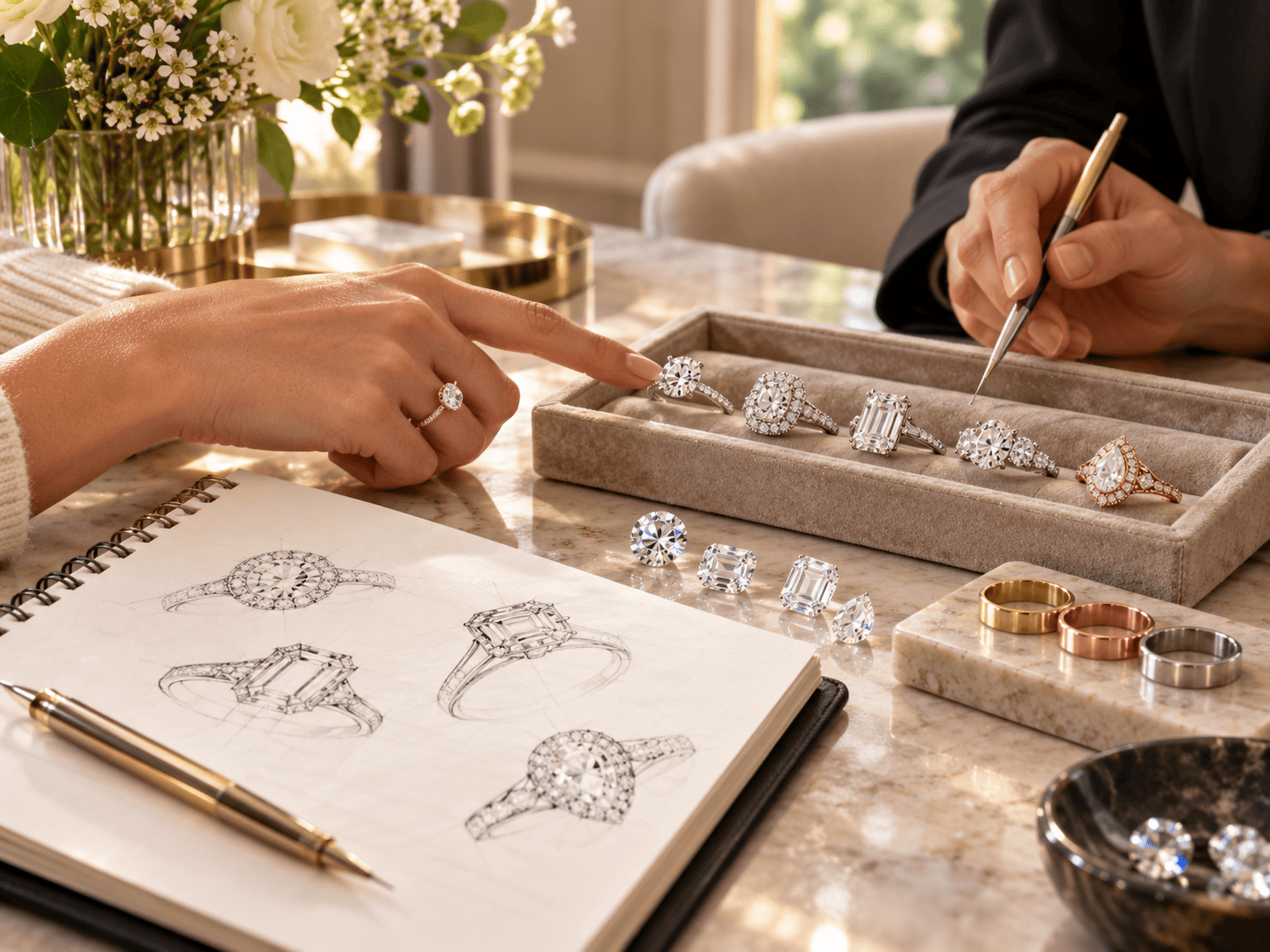
Step 3: Design the Setting and Metal
Now the ring takes shape around the stone. This is where you choose the setting style, the metal, and the details of the band.
Think about how you will wear it day to day, as well as how it looks. A higher setting shows the stone off but sits taller, while a secure setting in a durable metal is easier to forget you are wearing.
The setting and the diamond should also suit each other in size and proportion. A delicate band can look a little lost under a large stone, while a sturdier band balances it and holds it more securely, so the two are worth deciding together rather than one at a time.
Step 4: Review the Design Before It Is Made
This is the step that makes custom worth it. Before anything is crafted, you review the design and approve it, so there are no surprises when the ring arrives.
The review step is the whole point of custom. You see the ring before it exists, and nothing is made until it is right.
Use the moment well. Check the proportions, confirm the metal and the stone, and ask about revisions if something feels off (small changes now are far easier than after the ring is made).
Step 5: Crafting and Final Checks
Once you approve the design, the ring is crafted. At Candor, the diamonds are cut and the settings made in-house, so the stone and the setting are matched as part of the same process.
When it is finished, the diamond’s report confirms the stone, and a final check makes sure the fit and finish are right before it reaches you.
How Long Does a Custom Ring Take?
Longer than buying off the shelf. A custom ring is made to order, so it takes more time than picking a finished piece, and the exact timeline depends on the design.
The simple fix? Start early. If the ring is for a specific date, give yourself a comfortable cushion so the design and the crafting are never rushed. Your jeweler can give you a realistic timeline once the design is settled.
FAQs
Is a custom lab-grown ring more expensive?
Not necessarily. A lab-grown diamond costs less than a mined one, which can offset the design work, so custom is often more affordable than people expect. It depends on the stone and the complexity of the setting.
Can I design a ring around a lab-grown diamond I already have?
Usually, yes. A setting can be built around a stone you have chosen, as long as the diamond and the setting suit each other.
How involved is the process?
As involved as you want. You make the key choices (the diamond, the setting, the metal), and your jeweler guides the details, so it is collaborative rather than something you do alone.
Will a custom ring come with a grading report?
Yes. The diamond should still come with its own independent report, the same as any other lab-grown stone, so you can verify it.
What should I prepare before starting?
A budget, a few saved designs, and the shape or style you like. That is enough to make the first conversation productive.
Start Your Custom Ring at Candor
A custom ring is easier when you can talk it through with the people who make it. Candor cuts its diamonds and builds its settings in-house, so the design, the stone and the setting all come together in one place.
When you are ready, start a custom design with a Candor gemologist and bring the ideas you have gathered.