Platinum vs Gold for a Lab-Grown Diamond Engagement Ring
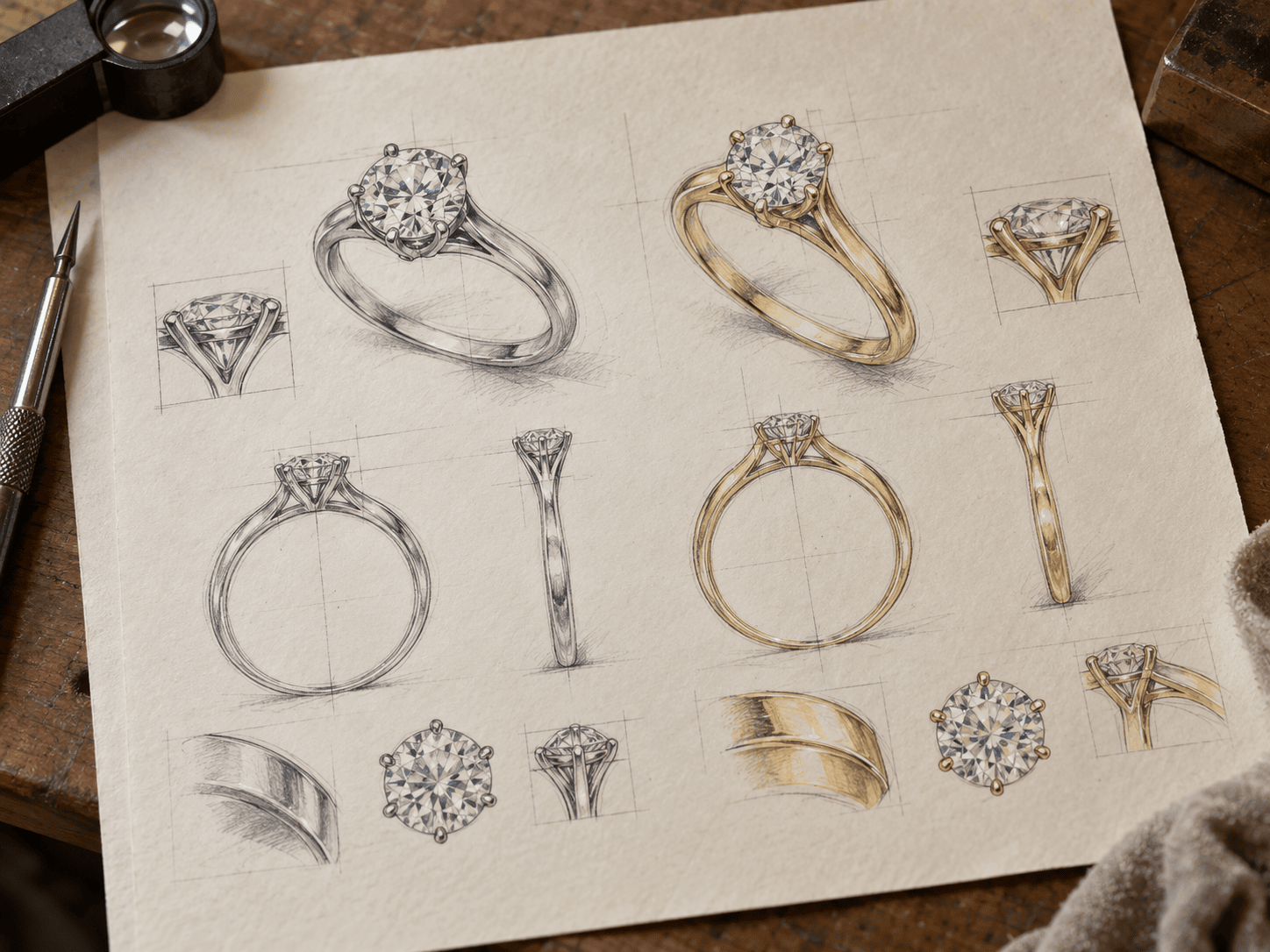

The metal you choose sets the color and the feel of the whole ring, and it is a practical decision as much as a style one. Durability, upkeep and cost all change with the metal, so it is worth getting right.
The metal is one of a few choices that shape a ring, alongside the diamond, its shape and the setting (our guide to how shape and setting work together covers those). The good news is that a lab-grown diamond costs less than a mined one, which often leaves more room in the budget for the metal you really want.
Here is how platinum and the three golds compare, and how to choose between them.
Quick answer: Platinum is naturally white, the most durable and the most expensive. White gold gives a similar white look for less, but it needs occasional replating to stay bright. Yellow and rose gold are warm, low-maintenance classics. Choose by color, skin, upkeep and budget.
Platinum vs Gold at a Glance
| Metal | Color | Upkeep | Durability | Relative cost | Good for |
| Platinum | White, stays white | Low (re-polish if you like) | Very high | Highest | White that never fades, sensitive skin |
| White gold | White (rhodium-plated) | Replate every few years | High | Lower than platinum | A white look for less |
| Yellow gold | Warm yellow | Low | High | Moderate | A classic, warm look |
| Rose gold | Warm pink | Low | High | Moderate | Something a little different |
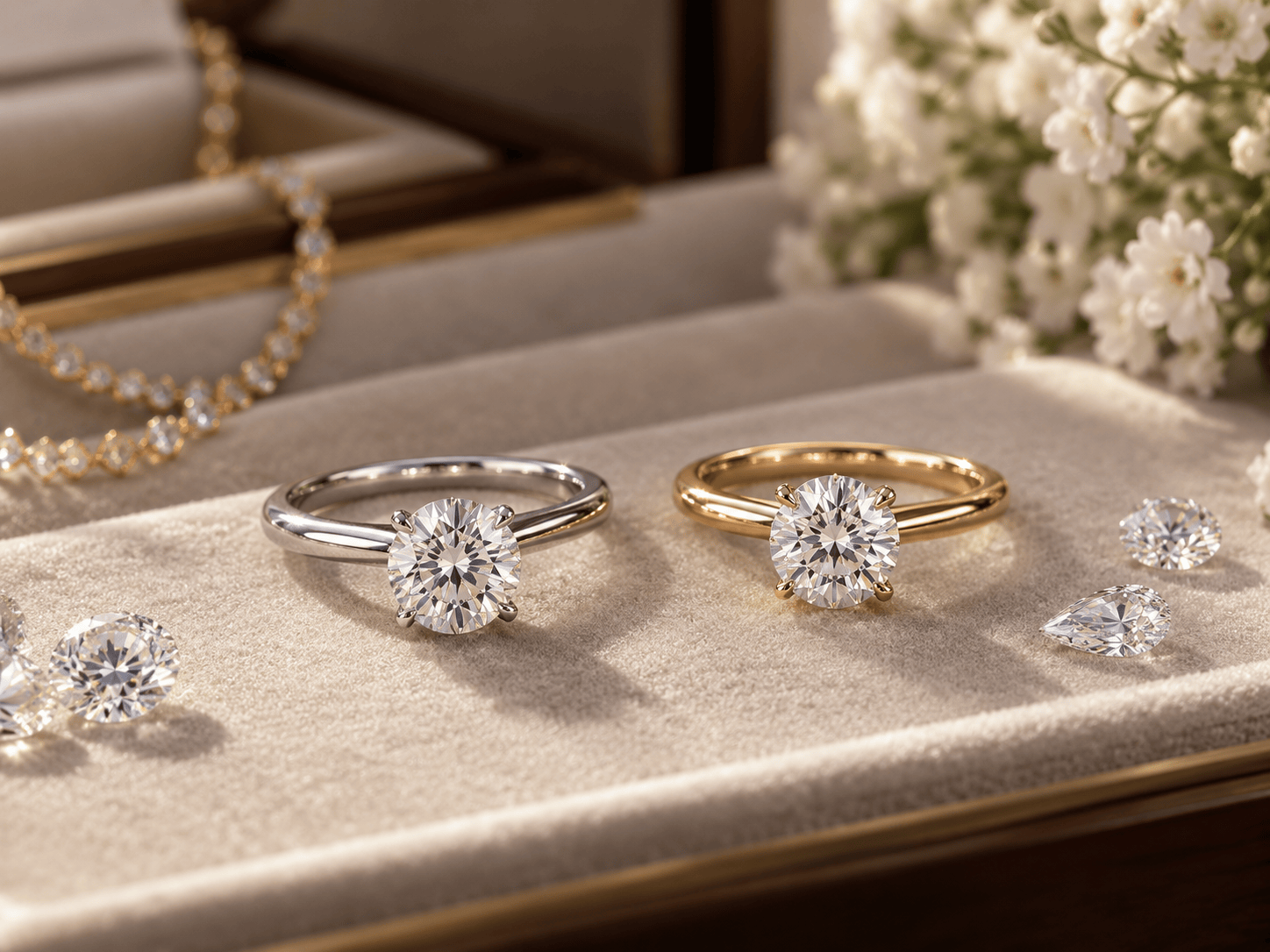
Platinum
Platinum is naturally white and stays that way. It does not need plating to hold its color, so the white you see is the white you keep.
It is also the most durable choice. Platinum is dense and holds diamonds securely, which is part of why it is popular for prong settings. Over time it develops a soft matte sheen called a patina, and a quick polish brings the bright finish back whenever you want it (some people prefer the patina and leave it).
Two more things set it apart. Platinum is usually hypoallergenic, so it suits sensitive skin, and it is the most expensive metal here, because a ring uses more of it by weight and it takes more work to craft. According to The Knot, platinum also tends to wear better than white gold, which can thin slightly over many years.
White Gold
White gold gives you the cool, white look of platinum for less money, which is why it is so popular.
There is a catch. White gold is yellow gold mixed with white metals and then coated with rhodium for its bright finish. That coating wears over time and needs replating to stay crisp, usually every one to three years depending on how often you wear it. Underneath, the metal has a slightly warmer tone (a faint yellow or gray, depending on the alloy).
You also have a choice of karat. 14k white gold is harder and more affordable, while 18k is purer and a little softer, and sits closer to platinum on price. One note for sensitive skin: some white gold contains nickel, which can irritate, so ask for a nickel-free alloy if that is a concern.
White gold and platinum can look almost identical on day one. The difference shows up later, in the upkeep and the price.
Yellow and Rose Gold
If you like warmth rather than white, yellow and rose gold are the classics.
Yellow gold is the traditional choice. Its color runs through the metal, so it never needs plating, and it hides small scratches well. 14k is the more durable everyday option, while 18k gives a richer color.
Rose gold is yellow gold mixed with copper, which gives it a warm pink hue and makes it hard-wearing. It reads a little more vintage and distinctive, and like yellow gold, it keeps its color with no plating to maintain.
Which Metal Should You Choose?
Still deciding? It comes down to the look you want and how much upkeep you are happy with:
- Choose platinum if you want a white that never fades, the most durable setting, or a metal that suits sensitive skin, and the cost fits.
- Choose white gold if you love the white look but want to spend less, and you do not mind replating it every few years.
- Choose yellow gold if you want a warm, classic ring with almost no upkeep.
- Choose rose gold if you want something warmer and a little different, with the same easy care.
A lab-grown diamond pairs well with any of them, so as you look through the ring collection, you can choose the metal on looks and lifestyle rather than on saving money elsewhere.
FAQs
Is platinum or white gold better for an engagement ring?
Neither is better. Platinum stays white and is more durable, while white gold gives a similar look for less but needs occasional replating. It depends on your budget and how much upkeep you want.
Does white gold turn yellow?
Over time, a little. The rhodium plating that makes it bright wears off and the warmer tone underneath shows through, which is why white gold is replated every few years.
Which metal is most durable?
Platinum is the most durable, since it is dense and resists wearing thin. Among golds, 14k is harder and more scratch-resistant than 18k.
Is platinum worth the extra cost?
It can be, if a permanently white color, the most secure setting, or sensitive skin matter to you. If not, white gold gives a similar look for less.
Does the metal change how the diamond looks?
A little. White metals like platinum and white gold keep a cool, colorless look, while yellow and rose gold add warmth that can flatter certain diamonds and skin tones.
Choosing Your Metal at Candor
The easiest way to decide is to see the metals next to each other, since color and weight are hard to judge from a screen.
Candor crafts its rings in-house in platinum and gold, so you can compare how each one looks with your diamond and setting. When you are ready, ask a Candor gemologist about metals and we will help you find the one that fits.