Solitaire, Halo or Three-Stone: Which Lab-Grown Diamond Ring Setting Should You Choose?
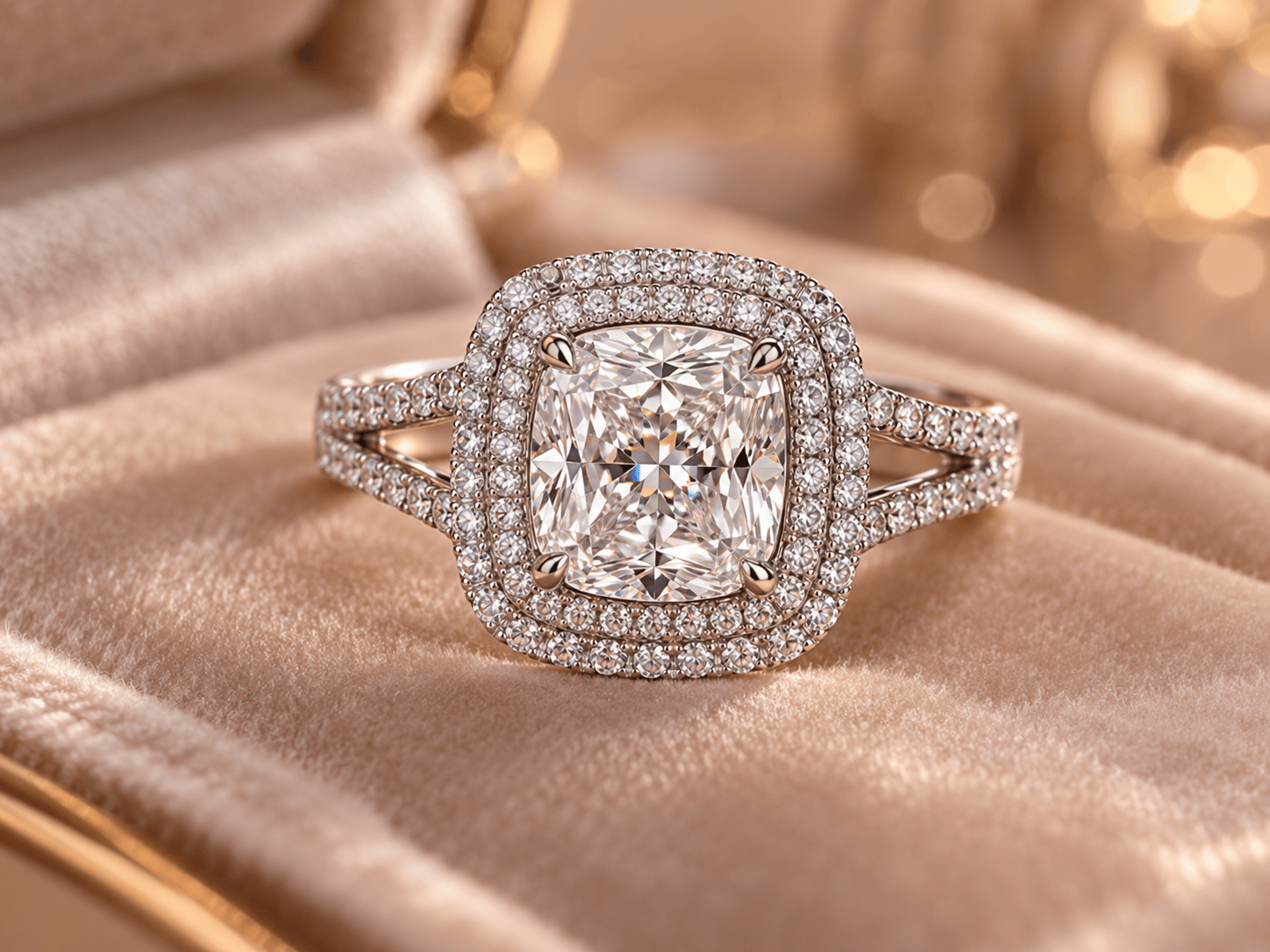

Of all the setting styles, three come up again and again: the solitaire, the halo, and the three-stone. Each one takes the same diamond and builds a very different ring around it.
The right choice is not about which setting is best. It is about what you want the ring to do, whether that is showing off the stone, making it look as big as possible, or giving it more presence across the finger.
Here is how the three compare, and how to pick the one that suits you.
Quick answer: Choose a solitaire if you want a clean, classic ring that shows the diamond. Choose a halo if you want the center to look bigger and the ring to sparkle more. Choose a three-stone if you want more presence and width, with a little meaning built in.
The Three Settings at a Glance
| Solitaire | Halo | Three-stone | |
| Look | Clean, classic | Full, sparkly | Wide, substantial |
| Makes the center look bigger | No | Yes | A little |
| Added sparkle | Low | High | Medium |
| Relative cost | Usually lowest | Medium | Higher (extra stones) |
| Best for | Showing the stone | Maximizing size and shine | Presence and meaning |
Solitaire: The Classic
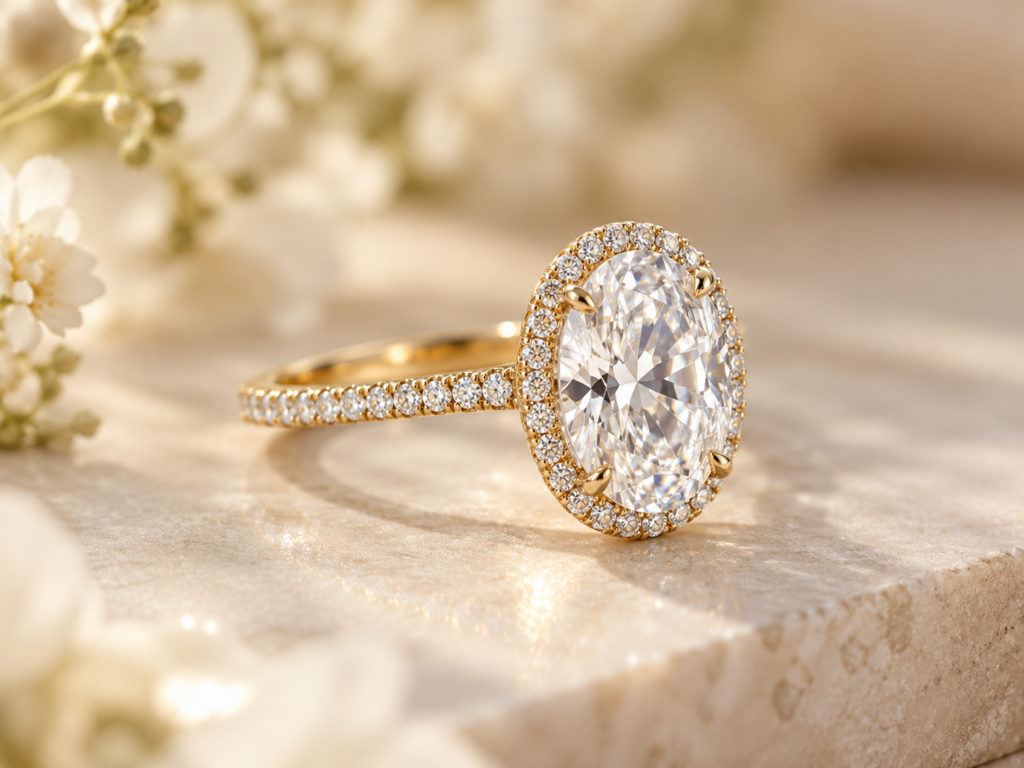
A solitaire is a single diamond on a plain band. Nothing competes with the stone, so its shape and cut do all the talking.
It is also the most versatile of the three. A solitaire suits any diamond shape, works with any budget, and never looks dated. Because there is less going on around the stone, the band and the metal carry more of the look, which makes a solitaire an easy ring to make your own with a wider band or a hint of detail.
The honest trade-off? Some people find a solitaire too plain, especially if they wanted more sparkle. If that is you, a solitaire setting with a little pavé on the band is a gentle step up that keeps the clean look.
Halo: Maximum Size and Sparkle
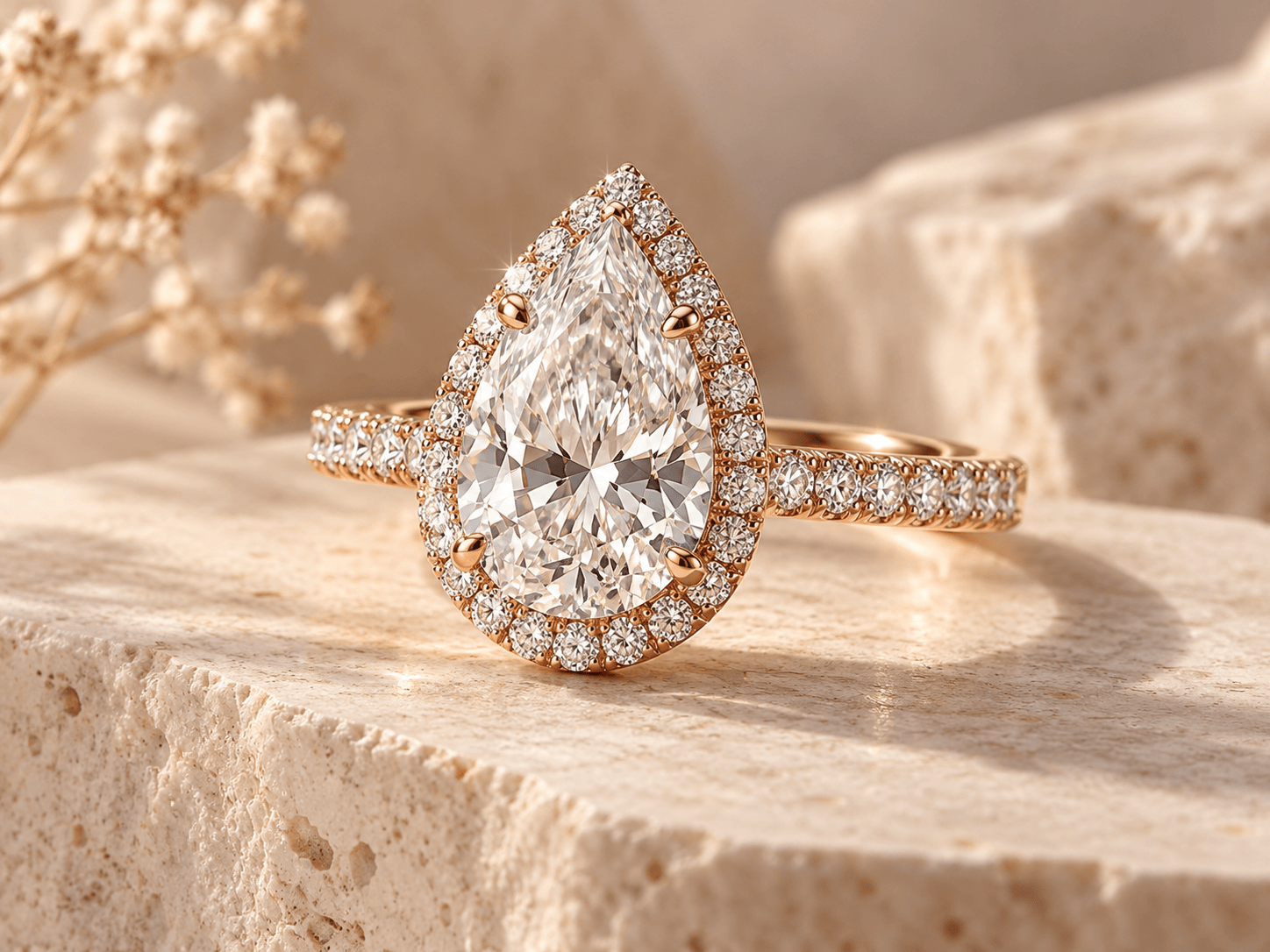
A halo rings the center diamond with small stones, which does two things at once. It makes the center look larger, often by a noticeable margin, and it adds sparkle right where the eye lands.
That makes a halo the one to choose if you want the biggest, brightest look for your budget. It is especially flattering around round and oval diamonds, and it lets a modest center stone wear well above its weight.
One thing to know: a halo setting has more small stones, and small stones need a little more care over the years (an occasional check keeps them secure). It is a fair trade for the size and sparkle, as long as you know it going in.
If you love the halo effect but want less width on top, a hidden halo is worth a look. It tucks the small stones under the center stone instead of around it, so the extra sparkle shows mainly from the side while the top view stays clean.
Three-Stone: Presence and Meaning
A three-stone setting places a diamond on each side of the center. The result is a wider, fuller ring that carries real presence on the finger.
It also carries meaning. Many people read the three stones as past, present and future, which makes the style a popular choice for an engagement ring. The side stones can match the center shape or contrast with it (tapered baguettes and half-moons are popular choices) for something more personal.
The trade-off is cost. Three-stone rings use more diamond, so they usually cost more than a solitaire, and the stones need to be chosen to suit each other. Larger side stones make a bolder statement and add to the price, while smaller ones keep the focus on the center, so the proportions are worth thinking through. Done well, the effect is worth it.
Which Setting Should You Choose?
The right setting is the one that matches the ring you picture, not the one with the most stones.
Start with what you want the ring to do:
- Choose a solitaire if you love a clean, classic look, want to show the diamond itself, or want the most flexibility for your budget.
- Choose a halo if you want the center to look as large as possible and you love plenty of sparkle.
- Choose a three-stone if you want more width and presence, or you like the meaning of the three stones.
If your stone is on the larger side, the choice shifts a little, since a big center has its own needs. Our guide to which settings suit a larger stone covers that in more detail.
FAQs
Which setting makes a diamond look biggest?
A halo makes the center look biggest, because the surrounding stones add visual size. A three-stone adds width too, while a solitaire shows the diamond at its true size.
Is a solitaire or halo better?
Neither is better. A solitaire is cleaner and shows the stone; a halo looks bigger and sparkles more. It depends on the look you want.
Does a halo need more maintenance?
A little. A halo has more small stones, so it is worth having them checked now and then to keep them secure.
What does a three-stone ring symbolize?
The three stones are often read as past, present and future, which is part of why the style is popular for engagements.
Which setting is most affordable?
A solitaire is usually the most affordable of the three, since it uses one diamond and less metalwork. A three-stone tends to cost the most.
Finding Your Setting at Candor
The easiest way to decide is to see the same diamond in each setting, because the difference is clearer in person than on a screen.
Candor builds its settings in-house, so you can compare a solitaire, a halo and a three-stone around the stone you have in mind. When you are ready, find your setting with a Candor gemologist and see which one feels right.