What to Look for in a 3 Carat Lab-Grown Diamond Ring Before You Buy
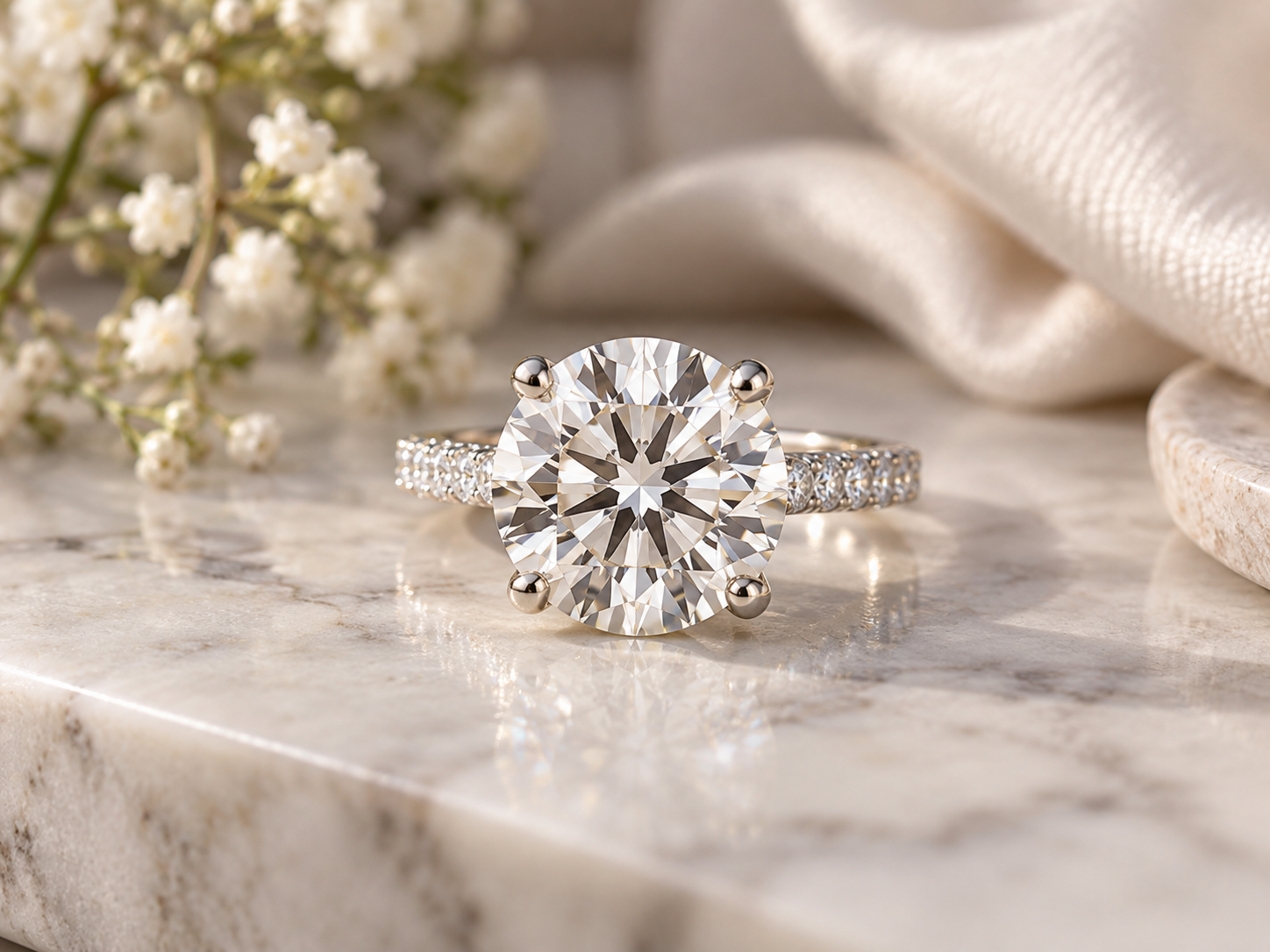

Two diamonds with the same weight can look quite different once you see their measurements, shape, clarity, and overall appearance.
And once that diamond is going into a ring, the setting matters too. It can change how the center stone looks, how high it sits, and how the finished ring looks on your hand.
Here’s what to check before you buy, from the grading report to the details you can only really judge by looking at the actual diamond.
Can Two 3 Carat Diamonds Look Different Even If Both Say 3.00 Ct?
Absolutely. Two diamonds can both be 3.00 ct and still look pretty different side by side.
That’s because carat tells you the weight, not how much of the diamond you actually see from the top. One may spread more of its weight across the face, while another carries more of it below the girdle.
IGI also notes that diamonds with the same carat weight do not necessarily look the same size.
So when you compare options, take a look at the actual measurements too. The difference can become even more noticeable once the diamond is set, especially if you’re comparing different shapes or setting styles.
What Changes With the Diamond Shape?
A 3 carat round should not be judged in the same way as a 3 carat oval or emerald cut. Each shape has a few different things you’ll want to keep an eye on. Here’s a quick look:
| Shape | What is worth looking at closely |
| Round | Proportions, symmetry, and how evenly the diamond returns light |
| Oval | Bow-tie, outline, and length-to-width ratio |
| Pear | Bow-tie, symmetry, and the balance between the shoulders and point |
| Marquise | Bow-tie, symmetry, and whether the two tips line up well |
| Emerald | Clarity through the broad step facets and the length-to-width look |
| Radiant | Facet pattern and how evenly it looks across the stone |
| Cushion | Facet pattern, outline, and whether you prefer a squarer or longer shape |
There isn’t one perfect proportion for every fancy shape. With ovals, cushions, and other elongated cuts, the outline you personally like can matter just as much.
What Should I Watch For In A 3 Carat Oval, Pear, Or Marquise?
If you are looking at an elongated brilliant shape, pay attention to the middle of the diamond.
That darker area across the center is known as a bow-tie. It is common in ovals, pears, and marquises, and some amount of contrast is completely normal.
The question is how strong it is and how it behaves when the diamond moves. A subtle bow-tie may barely bother you, while a broad, dark area that stays visible from several angles can become the first thing you notice.
GIA research found that people tended to react less favorably to broad, dark, persistent bow-tie patterns, while subtler patterns produced more varied preferences.
If you’re watching an oval, pear, or marquise on video, watch how the darker area looks as the stone moves.
Is VS1 Or VS2 Enough For A 3 Carat Lab-Grown Diamond?
Yes, VS1 or VS2 can be enough for a 3 carat diamond. You want to see what the inclusions look like in the actual stone.
IGI considers their size, number, location, and how easy they are to see when giving a clarity grade. So two diamonds with the same grade can still look different. For example, an inclusion near the edge may not bother you at all, while one closer to the center might be much easier to notice.
If a VS diamond looks clean to you, there may be no reason to pay more for VVS.
If Two 3 Carat Diamond Rings Look Similar, How Do I Choose?
If you’re comparing two rings and both look good on paper, look at the finished rings side by side and check:
- Compare the center diamond’s length and width to see if one has a larger face-up size.
- Look at the diamond shape and proportions, especially if the two rings use the same shape.
- Compare how much metal surrounds the center stone and how the setting changes its overall look.
- Check the band width and how it looks next to a 3 carat center diamond.
- Look at the side profile to compare the setting’s height.
- Watch the videos, if available, since movement can show sparkle differences that a still photo may not.
Then compare the prices and grading reports once you’ve decided which ring looks better to you.
Frequently Asked Questions
What do terms like “girdle,” “bow-tie,” and “face-up” mean for a first-time buyer?
The girdle is the edge around a diamond, “face-up” means looking at it from the top, and a bow-tie is the darker area you may see across the center of some oval, pear, and marquise diamonds.
Is a bigger-looking 3 carat diamond always better?
Not always. A diamond can look larger from the top, but that alone doesn’t tell you how well it looks overall or whether you’ll actually prefer it.
What measurements should I compare on a 3 carat diamond?
Start with the length, width, and depth. If you’re looking at an elongated shape, check the length-to-width ratio too, since it can change how the diamond looks.
Does a 3 carat diamond need to be D color?
D gives you the highest color grade, but you don’t have to choose it. Compare nearby grades and see how much of a difference you can actually see.
How can I view diamonds or videos before purchasing online?
Most online diamond retailers provide photos and videos on the product page. For a closer look, you can also contact the retailer or book a virtual appointment to view and compare your options before buying.
See The Difference Before You Decide
When you’re choosing a 3 carat lab-grown diamond ring, there’s more to look at than the diamond itself. The shape, setting, band, and how they look together can change how the finished ring looks on your hand.
If you have a couple of options in mind and can’t decide between them, a Candor gemologist can help you compare the rings and understand what you’re seeing before you buy.
Compare your options with a Candor gemologist.