How To Choose A Setting For A 2 Carat Lab-Grown Diamond Ring

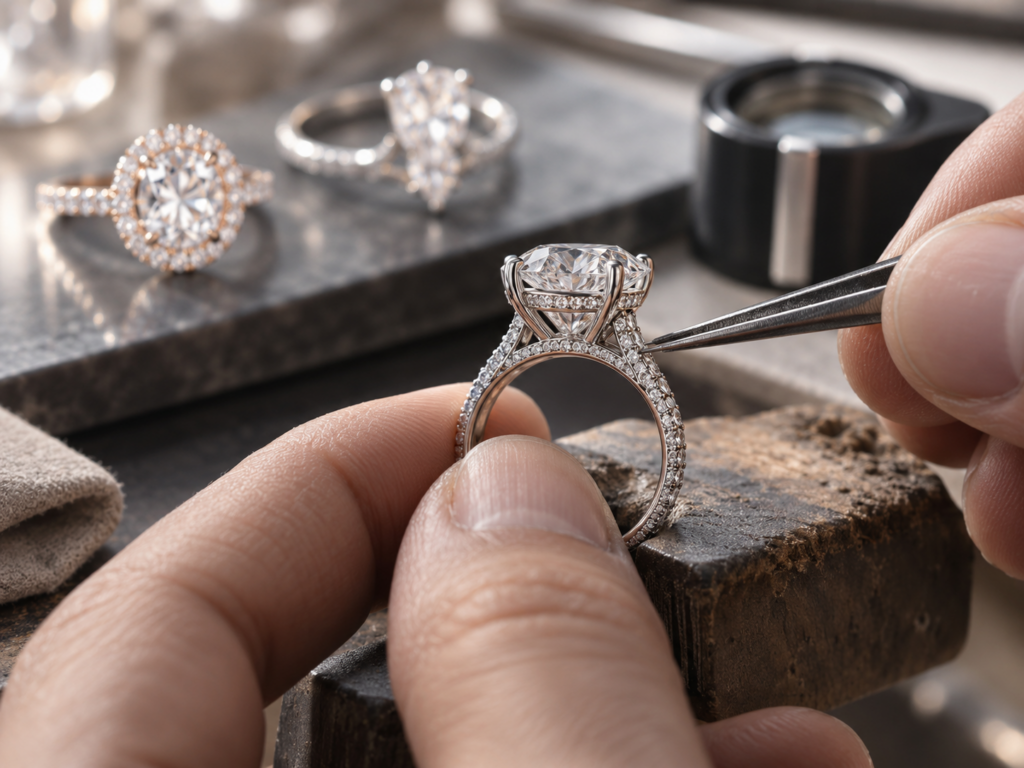
A 2 carat diamond already gives you a lot to work with. The setting you choose can make the ring look simple and clean, add more sparkle, or make the center stone stand out even more.
But with so many setting styles to choose from, it can be hard to know which one actually makes sense for a 2 carat diamond. You also want to think about how the ring will look on your hand and how comfortable it will be to wear every day. Let’s look at the options and what to keep in mind before you choose.
Start With How The 2 Carat Diamond Is Actually Held
Turn the ring around and look at it from the side. You’ll see things there that you can’t really tell from a top-down photo.
Look at the part holding the diamond, how it connects to the band, and how much of the stone is exposed. With prongs, more of the diamond is left open. A bezel covers the edge with metal, giving the ring a more enclosed look.
There’s another reason to look closely at the actual diamond. Two 2 carat stones can have different lengths, widths, and depths even when they have the same carat weight. The setting has to fit those measurements.
4 Prongs Or 6 Prongs For A 2 Carat Round
Both can work well with a 2 carat round diamond. Four prongs leave more of the stone visible and give the setting a lighter, more open look. Six prongs add two more points of contact around the diamond and can make the round outline feel a little more defined.
| 4 prongs | 6 prongs | |
| Look | More open around the diamond | Frames the round shape more closely |
| Stone visibility | Shows more of the diamond’s edge | Covers a little more of the edge |
| Support | Held at 4 points | Held at 6 points |
| You may prefer it if | You like a cleaner, lighter look | You want a little more support around the center |
The size and placement of the prongs will also change how much of them you actually notice when you look at the ring.
How High Should A 2 Carat Diamond Sit?
This is one of those details you might not think much about when you’re looking at rings online. But once the ring is actually on your hand, you’ll notice the difference.
A low-profile setting keeps the center closer to your hand. A higher setting lifts it up more, which you’ll notice from the side.
A cathedral setting, for example, has shoulders that rise toward the center diamond. It gives the ring more height and a different side profile than a setting that sits closer to the finger.
Think about your everyday life here. If you’re always pulling on sweaters, wearing gloves, or working with your hands, a tall center might get your attention more than you’d like.
And there’s one more thing to check before you decide: how your wedding band will sit next to it. Some settings leave enough room for the band to sit right against the engagement ring, while others leave a small gap.
The Diamond Shape Changes The Setting You Need
A 2 carat round and a 2 carat pear may weigh the same, but you can’t treat them exactly the same when choosing a setting.
The diamond’s shape changes where it needs support and how much of the stone you want the setting to cover. Here’s what that looks like across some of the most popular shapes:
| Diamond shape | What to look for in the setting |
| Round | 4-prong, 6-prong, and bezel styles can all work |
| Oval | Prongs should secure the elongated outline without covering too much of it |
| Pear | The pointed end needs careful protection |
| Marquise | Both pointed ends need protection |
| Princess | Corners are exposed areas that need support |
| Emerald or radiant | The setting should match the actual length, width, and corner shape |
| Cushion | Prong placement needs to suit the particular cushion outline |
This is especially worth checking with pear and marquise diamonds. Their pointed ends are more exposed, so pay attention to how the setting protects them.
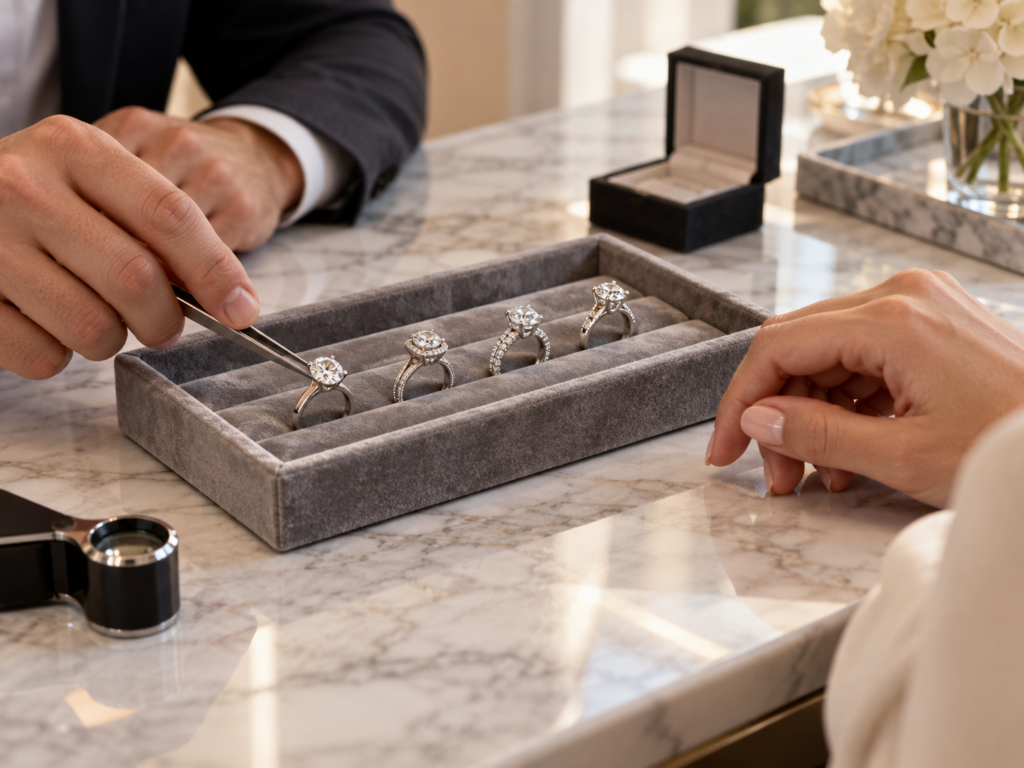
How Should The Band Look Beside A 2 Carat Center?
Now look at the band. It can make the same center diamond look quite different.
A thin band leaves more space around the diamond, which can make the center look more noticeable. A wider band brings more metal into the design and gives the ring a heavier look overall.
Then there’s pavé. A narrow pavé band might be about the same width as a plain band, but those small diamonds add extra sparkle and completely change the look.
And if you love the look of a really thin band, take a look at how it connects to the center setting, not just how wide it looks from the top.
Once The Structure Works, Choose The Style You Actually Like
This is where you can stop thinking about measurements for a minute and just look at the ring.
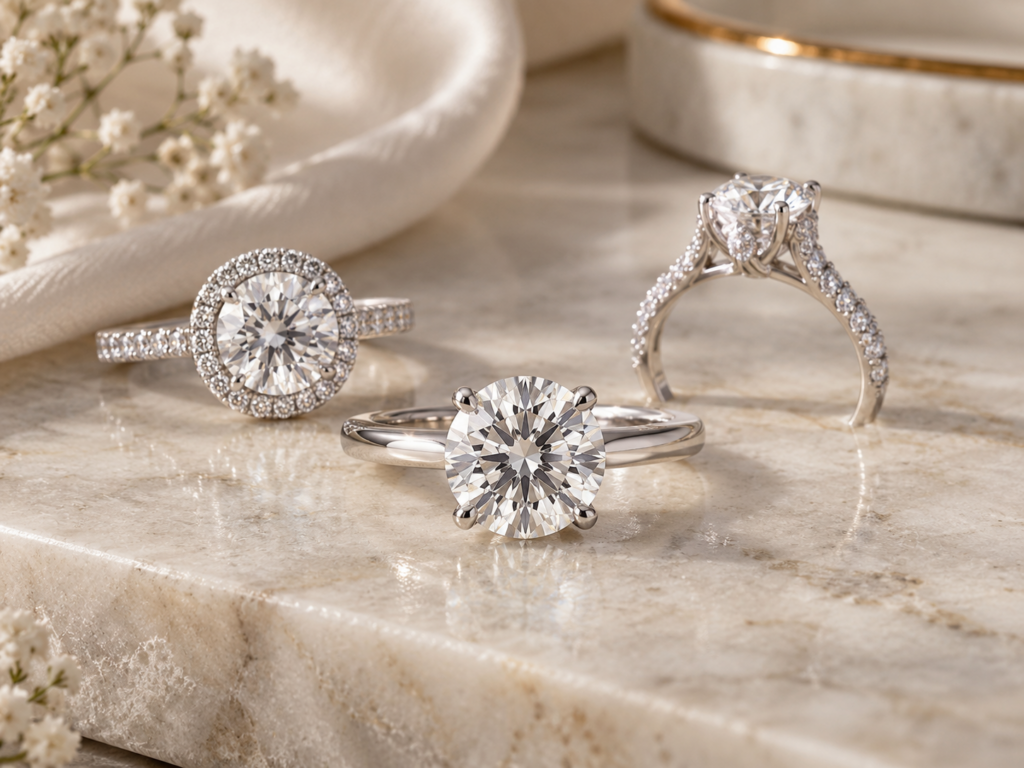
| Style | What it adds to the ring |
| Solitaire | Keeps most of the attention on the center |
| Pavé | Adds diamonds along the band |
| Hidden halo | Adds diamond detail below the center, especially from the side |
| Halo | Makes the overall top view wider |
| Three-stone | Adds more width and gives the side stones a visible role |
You don’t need a halo or pavé just because you’re choosing a 2 carat diamond. If you love a simple solitaire, let the center stone do the talking.
Frequently Asked Questions
Is 4 prongs or 6 prongs better for a 2 carat diamond?
Both work for round diamonds. Four prongs look more open, while six give the stone two extra points of support.
Is a low-profile setting better for a 2 carat diamond?
Not always. It keeps the diamond closer to your finger, while a higher setting adds height.
Can any setting hold a 2 carat diamond?
No. The setting needs to match the diamond’s shape and measurements, not just its carat weight.
What setting gives a 2 carat diamond more edge protection?
A bezel covers more of the diamond’s edge with metal, giving it extra protection from bumps and knocks.
Shop 2 Carat Lab-Grown Diamond Rings At Candor
At Candor, we cut and polish diamonds in-house and make our jewelry settings in-house too. That means a 2 carat center can be considered together with the setting that will actually hold it, including its shape, measurements, prong placement, setting height, and how the finished ring will sit on your hand.
Want to see the styles for yourself? Explore Candor’s Lab-Grown diamond engagement rings and take a look at different settings for larger center stones.
If you are choosing between two settings and cannot tell which will work better with your diamond, you can also book a virtual appointment with a Candor gemologist and compare the details before the ring is made.