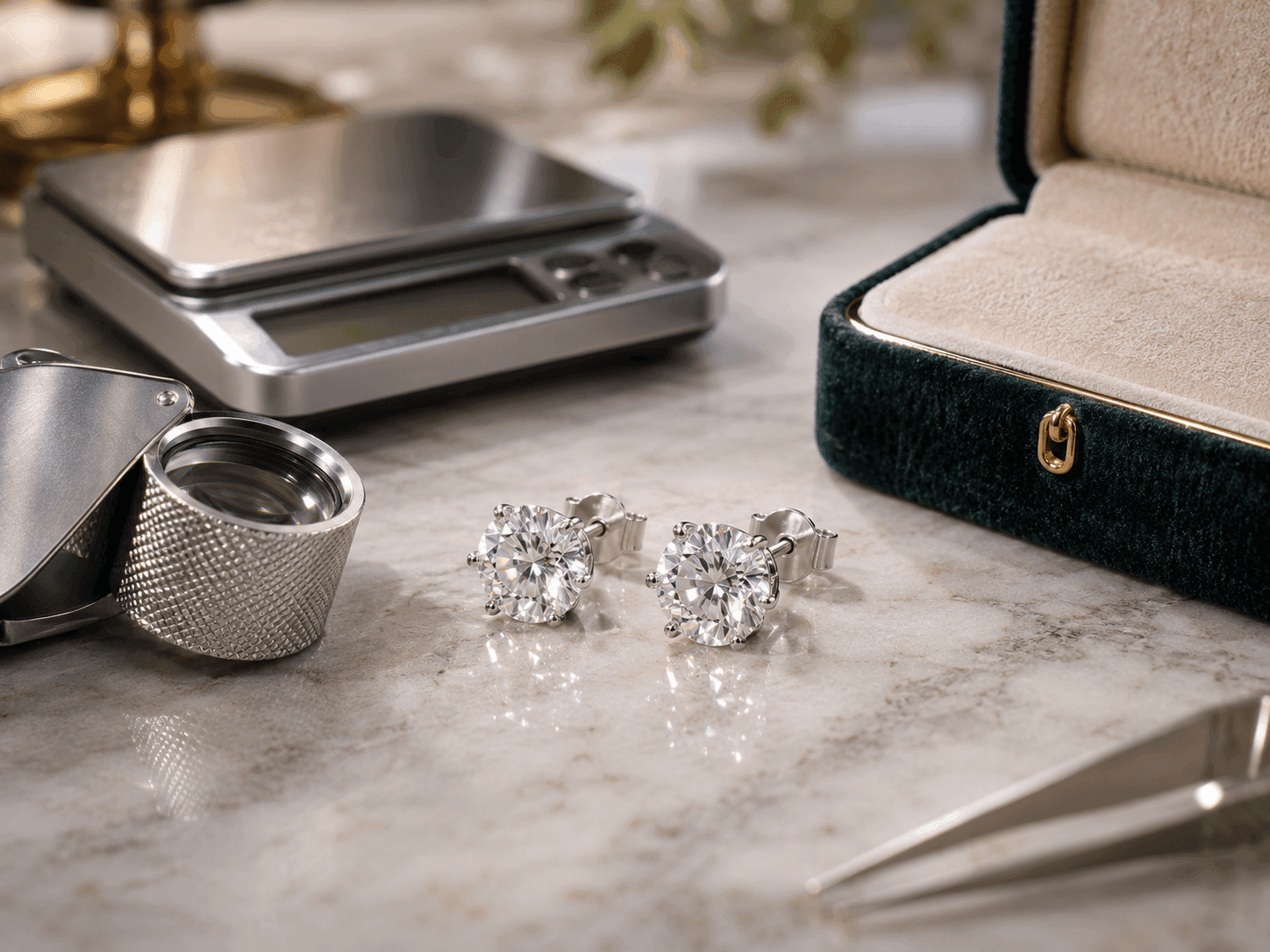

Lab-grown diamond earring prices vary with the number and size of stones, the metal and the design. As dated examples, Brilliant Earth’s stud listings checked in November 2026 showed a 1/4 ct total-weight pair at $245, a 1 ct total-weight pair at $795 and a 2 ct total-weight pair at $1,495. These are examples from one retailer, not a Candor price list or a lasting market range.
The first thing to decode is “total weight.” A pair labeled 1 ct total weight normally divides that weight across both earrings. It does not mean each ear holds a 1 carat diamond.
What Does Total Carat Weight Mean?
Total carat weight adds the diamond weights in the pair. In a simple stud pair with two similar center stones, 1 ct total weight means roughly 0.5 ct per ear. In a halo or drop earring, the stated total may include several small accent stones as well.
Read the product specifications before comparing pairs. Two earrings with the same total weight can look different if one spreads that weight across many small stones while the other places most of it in two centers. The settings can also make one pair appear broader or more compact.
| Listing description | First question to ask |
| 1 ct total weight studs | Is that about 0.5 ct in each ear? |
| 1 ct each | Is the pair about 2 ct total weight? |
| Halo earrings | How much weight is in the centers versus accents? |
| “From” price | Which metal and diamond size does it include? |
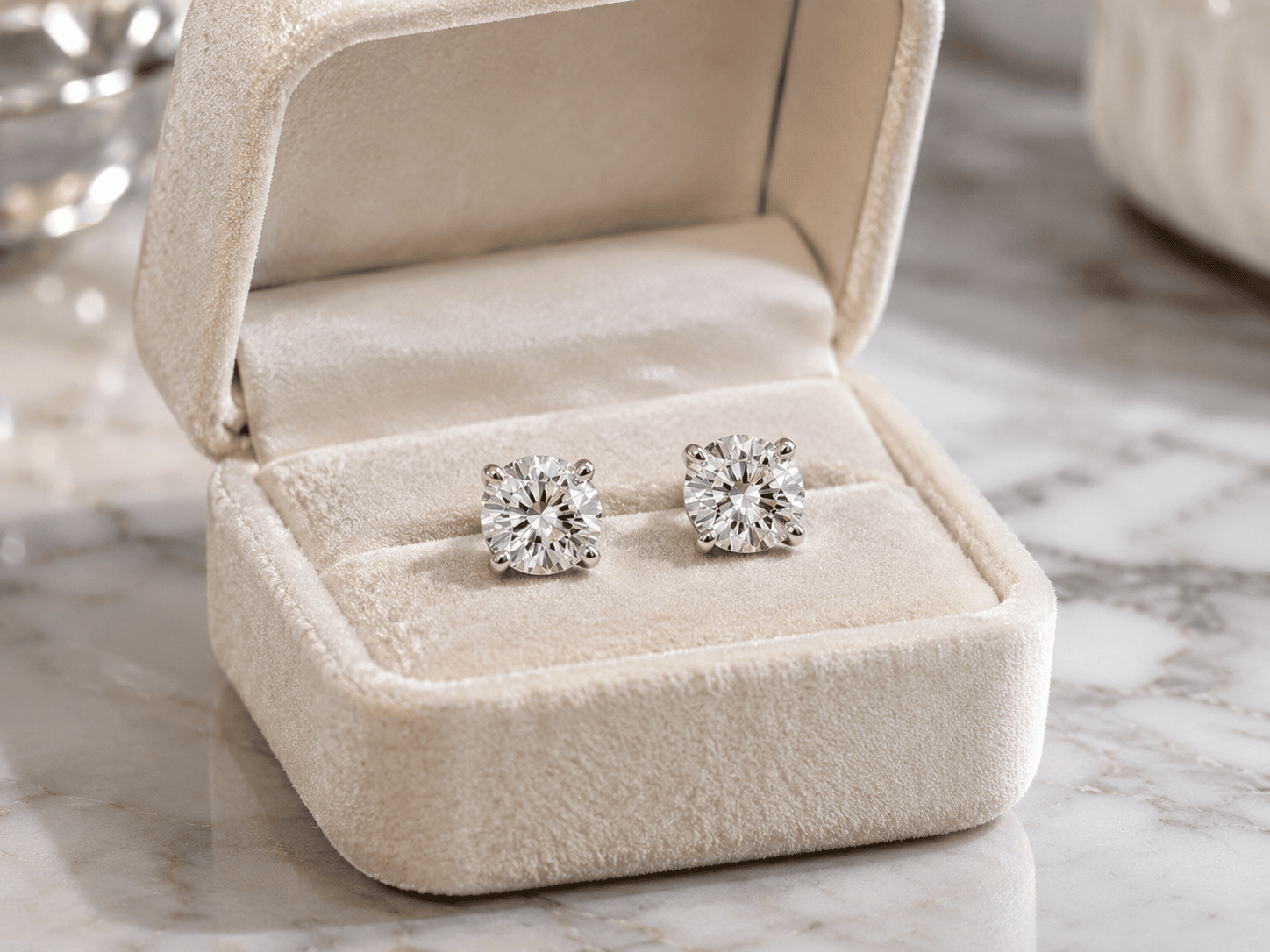
The dated prices above came from Brilliant Earth’s lab-grown stud collection1. The collection can change, so use live product pages for a purchase decision.
Why Do Two Pairs With the Same Weight Cost Differently?
The quality and appearance of the diamonds matter, and a pair needs two stones that look balanced together. Shape, cut, color, clarity and the way the two stones match all affect the finished result. GIA’s earring guide2 notes that matching a pair adds another decision compared with buying one center stone.
The setting changes cost as well. A simple prong stud is a different build from a halo, bezel or moving drop. Metal choice, backing design and any accent stones can change both the look and the price. If one pair costs more, check the full specifications before assuming the extra amount is for better center diamonds.
For everyday earrings, think about comfort and security. A larger stud may sit differently on the lobe than a smaller one, and the backing matters. A lower profile can feel more practical for regular wear, while a drop or hoop may suit occasions when you want movement.
How Much Should You Spend on the Diamond Grades?
There is no universal grade target for earrings. People usually view them from farther away than an engagement ring. A small clarity difference visible under magnification may not affect the way the pair looks when worn. You may prefer to prioritize matching, cut and a comfortable setting over a higher label you cannot see.
Still, inspect the actual pair. If the two diamonds differ visibly in color or brightness, that may bother you even if each stone has an attractive report on its own. If a pair includes larger center stones, ask whether individual reports are available and what they document. IGI’s lab-grown report guide3 explains the kind of origin and quality information a report may contain.
Are Studs Always Less Expensive Than Drops or Halos?
No. A large pair of studs can cost more than a small drop design. A halo can use many smaller diamonds, while a solitaire stud uses one diamond per ear. Compare the total weight, where that weight sits, the metal and the workmanship.
Candor’s Timeless Loop lab-grown diamond earring is one example of a design whose live page states a starting price, but its configuration and price must be checked when you shop. A starting price does not answer what your chosen metal or options will cost. Candor’s education hub covers the diamond basics if you want to compare the stones themselves.
How Can You Compare Pairs Fairly?
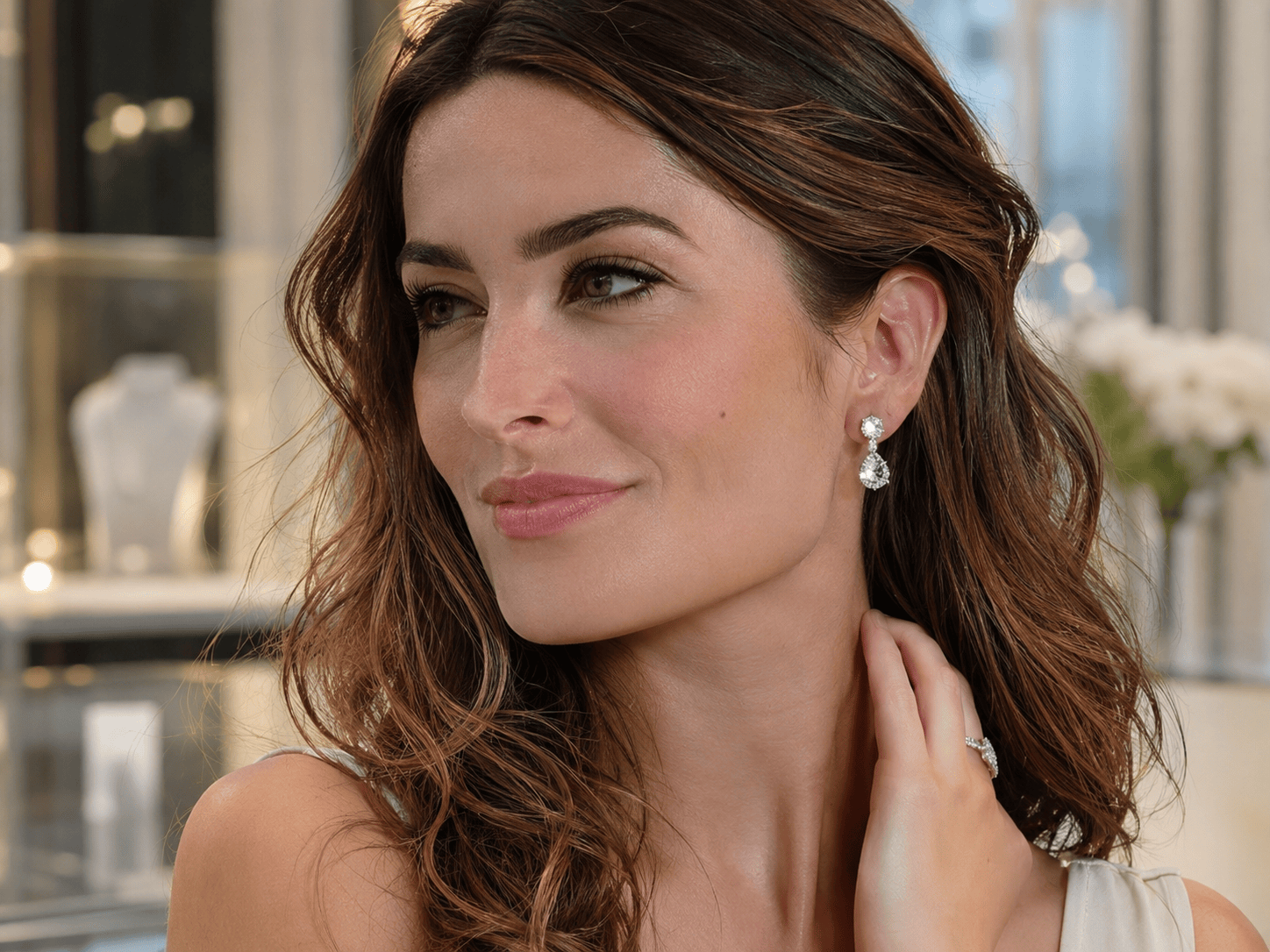
Choose the style first: studs, hoops or drops. Then compare pairs with similar center-stone sizes and metal. Look at photos on a person if available, because close-up product photos can make small earrings look much larger. Check the return terms, backing type and whether the stones are individually graded or described only as part of the finished pair.
If you are buying a gift, the recipient’s usual jewelry can be a better guide than a round carat number. Small studs may be worn often; a larger pair may be saved for occasions. The right spend is the amount that gets the look and construction you want without assuming a more expensive pair is automatically more suitable. Candor’s certification guide explains how to check a report number when one is provided for the stones.
Frequently Asked Questions
Does 1 ct total weight mean 1 ct in each earring?
No. It usually refers to the combined diamond weight in the pair. Confirm the individual stone weights on the product page.
Are lab-grown diamond earrings real diamonds?
Yes, when the stones are accurately described as laboratory-grown diamonds. They are different from cubic zirconia or other diamond simulants.
Do both earrings need identical grading reports?
Not necessarily. What matters is how the seller documents the stones and whether the pair looks matched to you. Ask what reports or product specifications are available for the particular pair.
Can a lower clarity grade work for earrings?
It can. Inspect the pair at normal viewing distance and decide whether any difference is visible or important to you. Do not buy a grade by a fixed rule alone.
If you are comparing styles, start with an actual pair and its specifications. A Candor virtual appointment can help you ask about stone sizes, matching and the finished price.
Sources
- 1Brilliant Earth’s lab-grown stud collection, brilliantearth.com
- 2GIA’s earring guide, GIA
- 3IGI’s lab-grown report guide, IGI