
A 1 carat lab-grown diamond has no single price. As a broad reference, Brilliant Earth’s price chart estimated $500 to $4,500 for a loose 1 carat lab-grown diamond as of July 2026. That is a retailer’s market estimate, not a Candor quote or a promise about today’s inventory. A finished ring adds the setting, metal and any other stones.
The wide spread is a reminder to compare the actual diamonds, not just the number “1.00 ct.” Here is what to check before deciding whether a price is reasonable for you.
What Does the Quoted Price Include?
Start by separating a loose diamond from a complete ring. A loose-stone listing is usually the center diamond alone. A ring price may include a setting, metal, accent stones and work to assemble the piece. Shipping, tax and optional services can change the total again.
The Brilliant Earth price chart1 labels its figures as general estimates dated July 2026. It is useful for seeing how broad the market can be. It cannot tell you what a particular Candor ring costs today. For that, open the individual product page, select the options you want and check the final price.
| Price shown | Check before comparing |
| Loose diamond | Is the setting included? Usually it is not. |
| Finished ring | What metal, center stone and accents are included? |
| “From” price | Which size, metal and grade does the starting price describe? |
| Promotional price | Is the discount current, and what is the actual checkout total? |
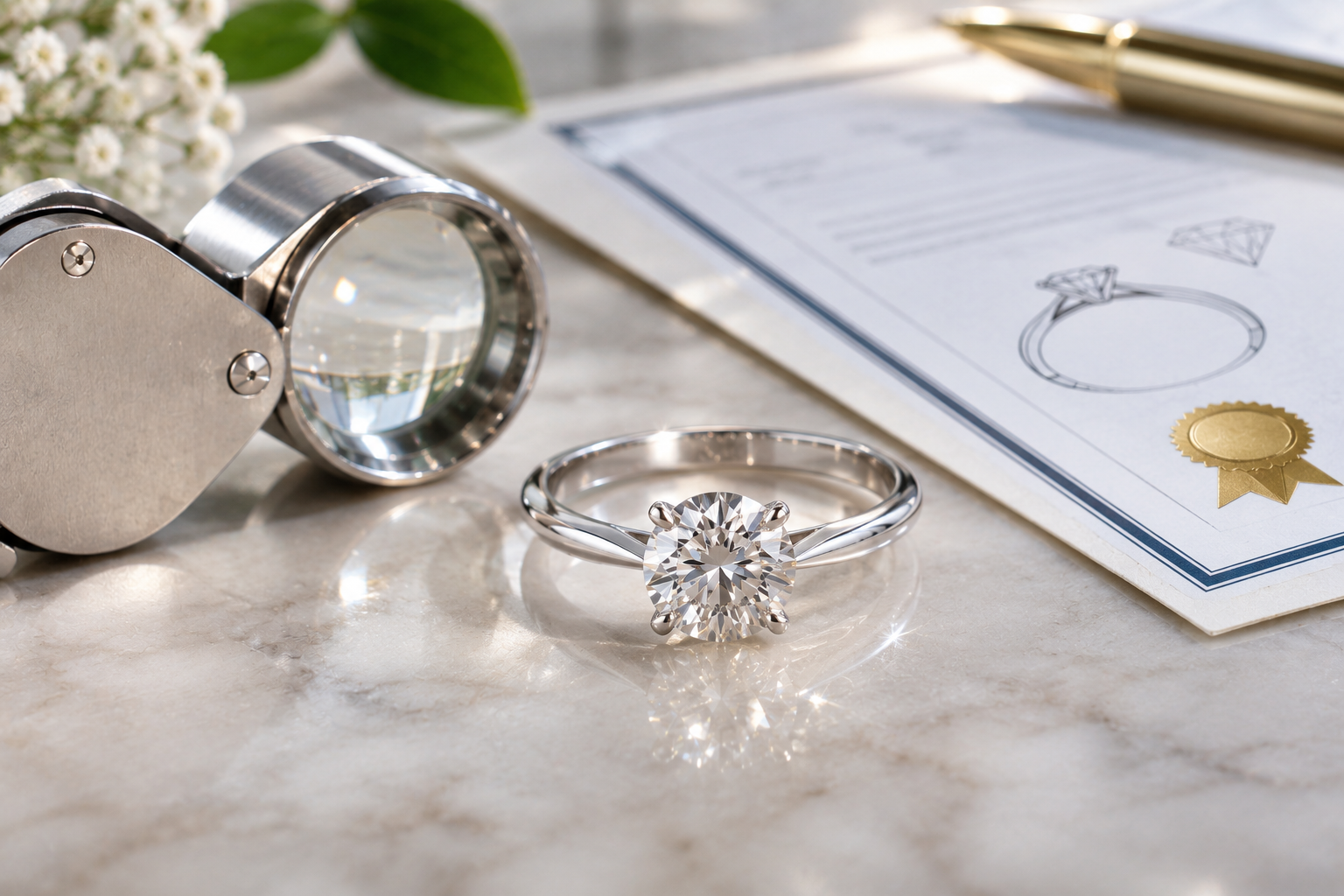
Candor’s ring catalog is a starting point for complete designs. Read the current product details rather than treating a catalog thumbnail as a quote for a custom combination.
Why Do Two 1 Carat Stones Cost Different Amounts?
Carat is weight, not a complete description of quality. Shape, cut, color, clarity and the stone’s appearance all play a part. One round diamond may look brighter than another of the same weight. A different shape can change how large the face looks even when both weigh 1 carat.
The report helps you compare characteristics. An IGI lab-grown diamond report2 can document origin and quality details. Read the actual report, because current services and grading language vary by laboratory. Then look at images or video of the specific stone. A grade you cannot see may be less valuable to you than a visible improvement in cut or a setting you prefer.
The finished ring matters too. A solitaire and a halo with the same center weight are different purchases. If you are deciding among styles, Candor’s carat, shape and setting guide explains how those choices change the look. The complete ring buying guide covers the broader checklist without repeating a price chart here.
Is a 1 Carat Diamond Always the Same Size on the Hand?
No. Carat measures weight. The face-up outline depends on the shape and proportions. A round and an oval at the same weight can cover different areas of the finger. A deep stone may carry more of its weight below the visible surface.
If the appearance matters more than landing exactly at 1.00 ct, compare measurements and photos alongside the weight. Candor’s size visualizer can help you see how different sizes might read on a hand, but it cannot replace seeing the individual cut and setting.
How Can You Compare Prices Fairly?
Choose two or three stones of the same shape and similar weight. Check their reports, measurements and images. Record the loose-stone price separately from the setting price. Then compare the complete ring totals in the same metal and style.
If one price is much lower, find the reason before calling it a bargain. The stone may have different grades, a different cut, a smaller face-up size or a different report. A lower-priced stone can still be the one you prefer; the point is to understand the trade-off.
For example, imagine two 1 carat ovals priced several hundred dollars apart. Before paying more, check their millimeter measurements and compare the face-up images under similar lighting. Then read the reports for differences in color, clarity and proportions. If the more expensive oval looks better to you, you have a reason to consider it. If the stones look much the same, the price difference might matter more elsewhere in the ring.
Avoid using an old article’s number as today’s quote. Prices and inventory move. Recheck the current listing when you are ready to buy, and save a copy of the product details and report you relied on.
Frequently Asked Questions
Does a 1 carat lab-grown diamond ring cost the same as a loose stone?
No. The complete ring adds the setting and any accent stones, and options such as metal can affect the total.
Is a larger carat weight always worth more?
Not in isolation. Price also depends on the other characteristics and current supply. Compare like with like before drawing a conclusion.
Do I need the highest color and clarity grades?
Only if the difference matters to you. Inspect the stone and decide whether a higher grade makes a visible improvement you want to pay for.
Where can I see a more current price?
Use live product listings and confirm what each price includes. Ask for the report number and final configured ring price before purchasing.
If you have a set budget, compare complete rings rather than loose stones alone. A Candor virtual appointment can help you review the center stone and setting together.
Sources
- 1Brilliant Earth price chart, brilliantearth.com
- 2IGI lab-grown diamond report, IGI