
How Does HPHT Grow a Diamond?
HPHT uses a chamber that applies high pressure and high temperature to carbon material. A diamond seed sits in the chamber. Carbon moves through a molten metal mixture and crystallizes on the seed. Over time, the crystal becomes large enough to cut and polish.
The process is designed to recreate some of the conditions under which natural diamonds form, but it happens in manufacturing equipment rather than deep in the Earth. GIA’s explanation of HPHT growth1 describes the carbon source, metal flux and seed in more detail.
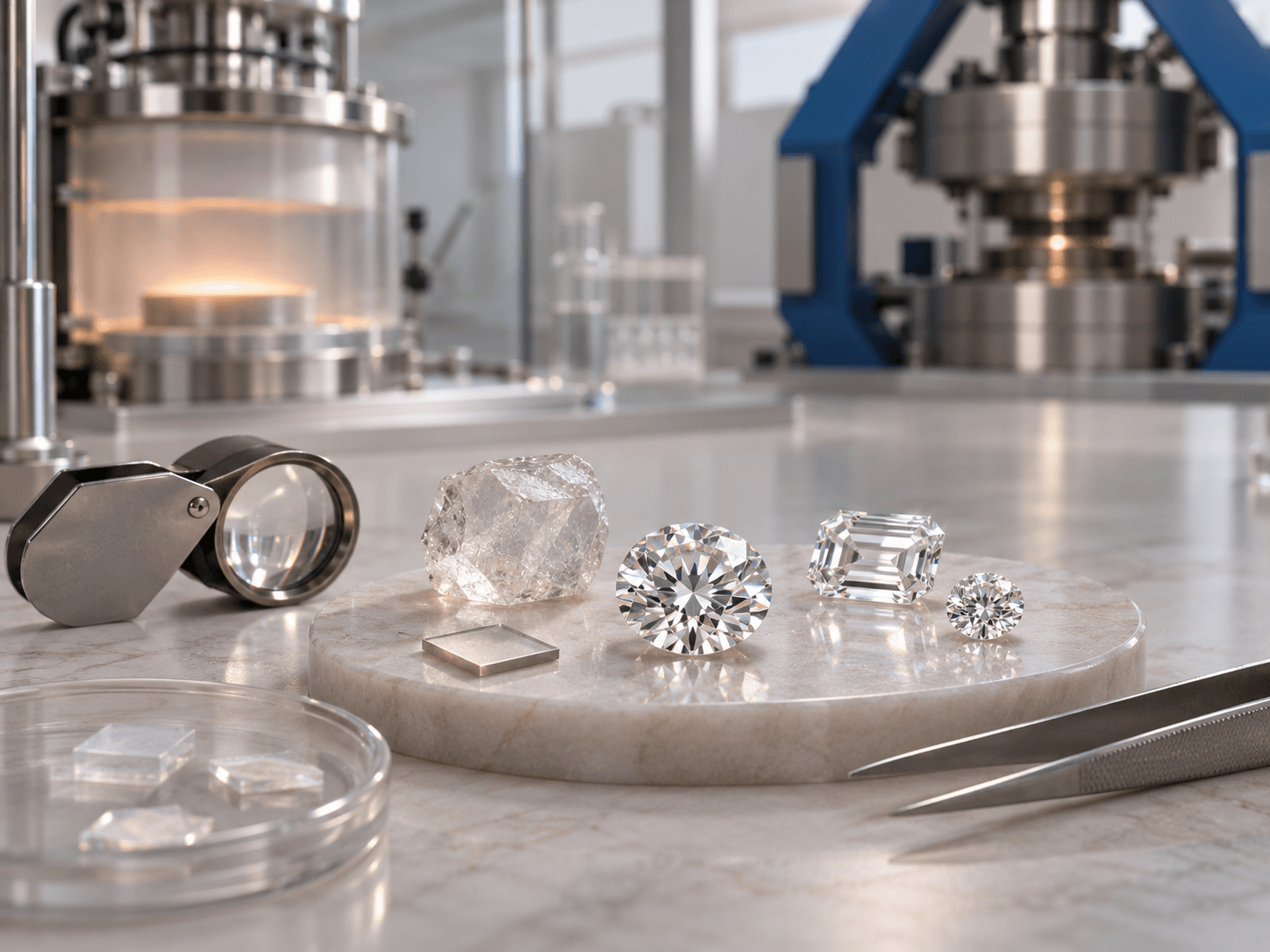
The result is a rough diamond, not a ready-to-wear gemstone. A cutter still has to decide how to orient it, how much weight to retain and how to polish the facets. Those later decisions affect the appearance of the stone you see in a ring.
How Does CVD Grow a Diamond?
CVD begins with a thin diamond seed placed in a chamber containing carbon-rich gas. Energy breaks apart the gas molecules. Carbon then settles onto the seed, building new diamond in layers. The method works at lower pressure than HPHT.
Imagine adding thin layers to a foundation, except the material being added becomes part of a diamond crystal. The crystal can look flat or tabular before it is cut. GIA’s CVD process guide1 explains why these rough crystals differ in shape from HPHT rough.
Some CVD-grown diamonds undergo treatment after growth to improve their color. That does not turn them into imitation diamonds. It does mean a buyer should read the report’s comments instead of assuming the growth method tells the whole story.
What Is Different About the Two Methods?
| Question | HPHT | CVD |
| Where does carbon come from? | A carbon source in a high-pressure chamber | Carbon-rich gas in a lower-pressure chamber |
| How does the crystal grow? | Carbon crystallizes on a seed through a molten metal mixture | Carbon deposits in layers on a seed |
| What should a buyer compare? | The finished stone and its report | The finished stone and its report |
Neither label guarantees a particular color, clarity or appearance. Diamonds grown by the same method can look different after cutting. If one stone looks brighter to you than another, the report and the actual images matter more than choosing a growth acronym.
There is also a common source of confusion: HPHT can describe a growth method or a treatment performed after a diamond has grown. A report may distinguish those two things. Ask what the wording means for the individual stone you are considering.
Is One Growth Method Better for an Engagement Ring?
Not by itself. A ring buyer wears the polished diamond, not the growth chamber. Start with a shape and look you like, then compare stones of similar size, cut quality and price. Check each stone’s origin and grading information.
An International Gemological Institute (IGI) lab-grown diamond report2 can describe the diamond’s 4Cs and laboratory-grown origin; comments may also address growth method or treatment. Report formats differ by laboratory and service, so read the document actually attached to the stone. A loose statement that a diamond is “certified” does not explain what was assessed.
If you are still choosing the shape and setting, Candor’s lab-grown diamond ring buying guide covers those decisions. You can also compare finished designs in the ring collection. The growth process does not replace either choice.
What Happens After the Diamond Has Grown?
The rough crystal is assessed, cut, polished and, when submitted for grading, examined by a laboratory. Cutting can have a strong effect on how the finished diamond handles light. The manufacturer may also need to remove material with less desirable color or inclusions, so the finished carat weight is not the same as the rough crystal’s weight.
This is why two diamonds described as “CVD” may sell at different prices. Their size, shape, appearance and report details may differ. The label tells you the origin process, not whether one specific diamond is a better fit for your ring.
Frequently Asked Questions
Are CVD and HPHT diamonds real diamonds?
Yes. Both methods grow diamond crystal from carbon. A laboratory-grown diamond is a diamond; “lab-grown” identifies its origin. It is different from cubic zirconia or another material that merely resembles a diamond. If that distinction is the question you are researching, see Candor’s guide to real lab-grown diamonds.
Can you see which method made a diamond?
Usually not by looking at a finished stone. Specialists can identify growth features with advanced equipment. For a purchase, read the grading or assessment report and verify its number with the issuing laboratory.
Does CVD mean the diamond was untreated?
No. Some CVD-grown diamonds receive treatment after growth. Read the report’s comments and ask the seller about any treatment disclosed there.
Does HPHT mean a diamond is natural?
No. HPHT can refer to a lab-growth process. It may also refer to a treatment. The report should identify whether the stone itself is laboratory-grown or natural.
If you have narrowed your choice to two stones, compare their reports and images side by side. A virtual appointment with Candor can help you discuss the differences that are visible in the finished diamonds.