
Why Are They Different If Both Are Made in a Lab?
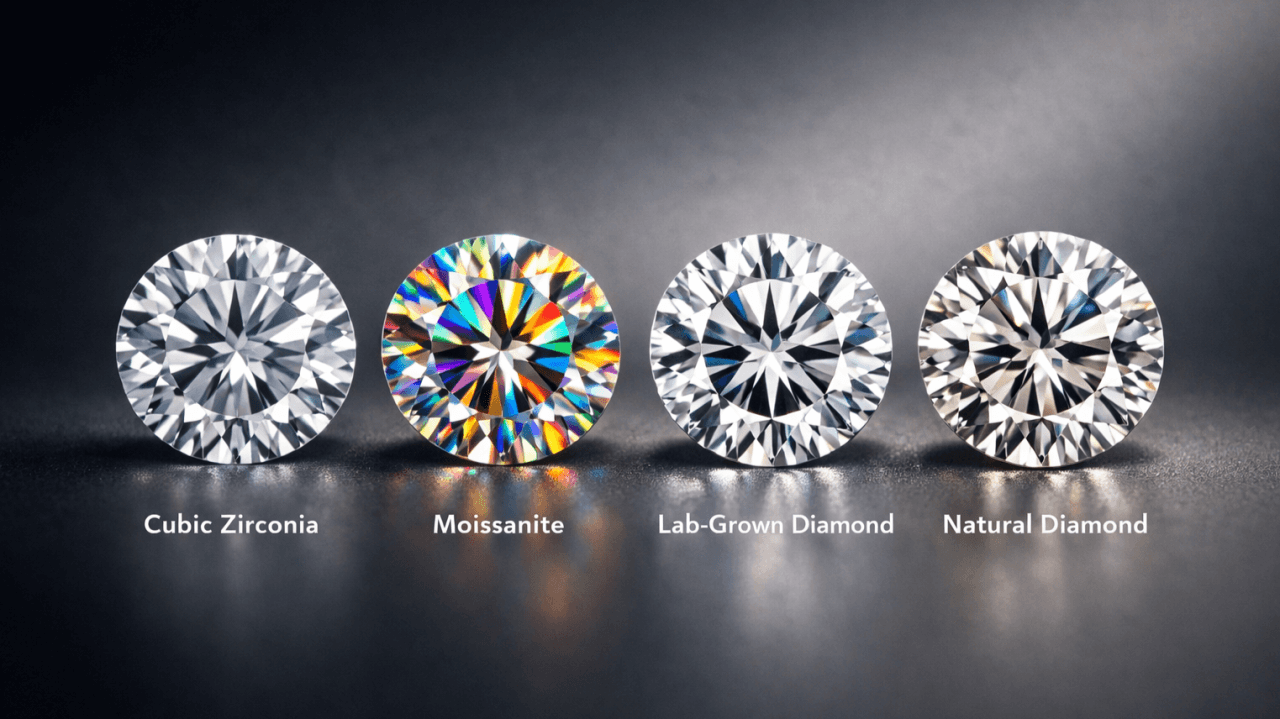
“Lab-grown” describes origin, not material. A lab-grown diamond has the same diamond crystal structure as a mined diamond. CZ is a diamond simulant: it resembles diamond but has a different chemical composition and physical properties. GIA’s explanation of simulants1 makes that distinction clear.
Think of the comparison as asking whether two clear stones are made of the same substance. Their visual similarity does not answer that question. A product called a “lab-grown diamond” should be a diamond, with its laboratory origin disclosed. A CZ product should be identified as cubic zirconia or a simulant.
| Feature | Lab-grown diamond | Cubic zirconia |
| Material | Carbon in diamond crystal structure | Zirconium dioxide |
| Is it a diamond? | Yes | No |
| Typical role | Fine jewelry center or accent stone | Diamond-look alternative |
| Hardness | Diamond ranks 10 on the Mohs scale | GIA lists CZ at about 8.5 |
| What to verify | Independent diamond report for a significant stone | Clear material disclosure from the seller |
The hardness difference does not mean a CZ ring will immediately fail. It does mean CZ is more likely to pick up wear and surface scratches over time. GIA’s guide to simulated diamonds2 also notes differences in light performance. Appearance is personal, so view actual stones rather than relying on a description of “sparkle.”
Will They Look Different in a Ring?
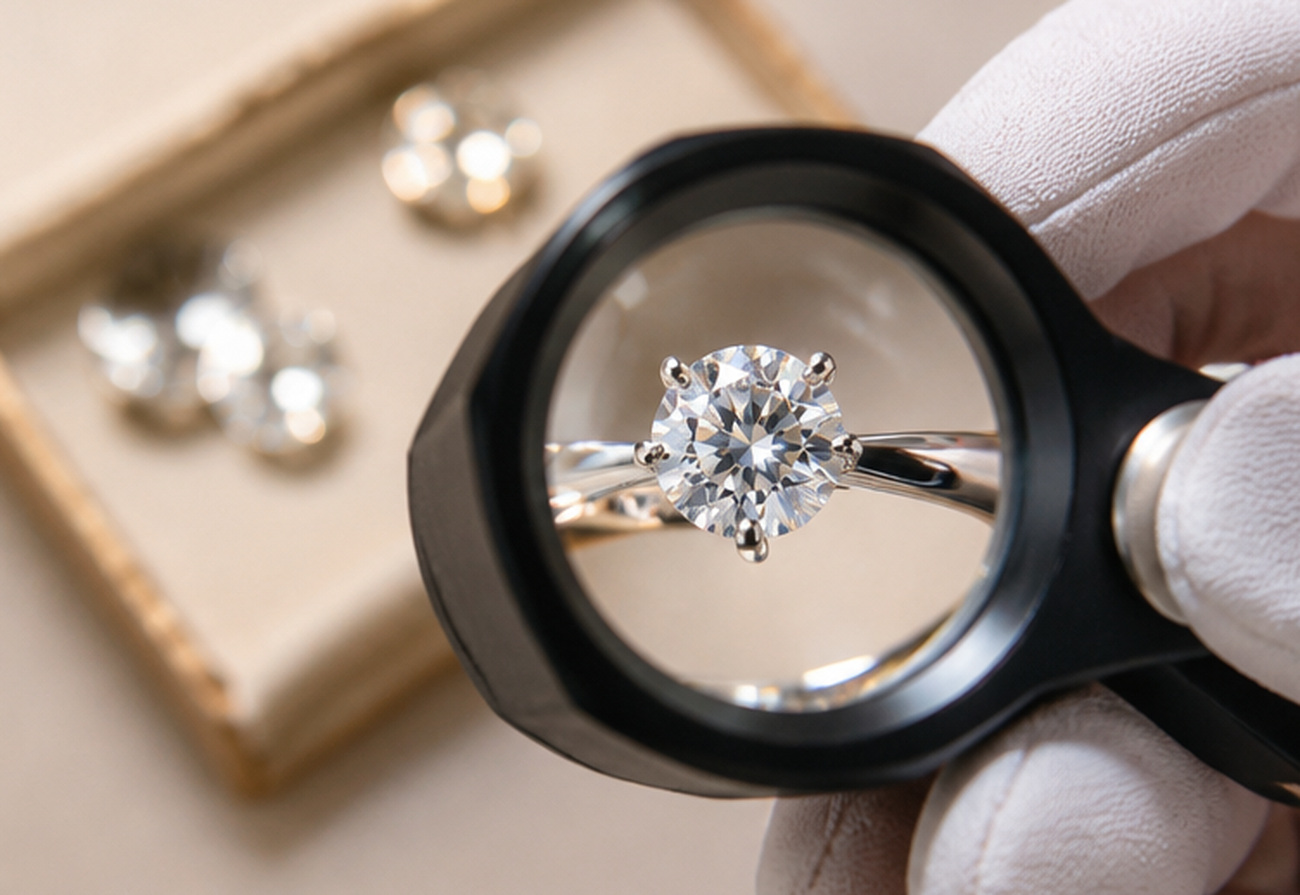
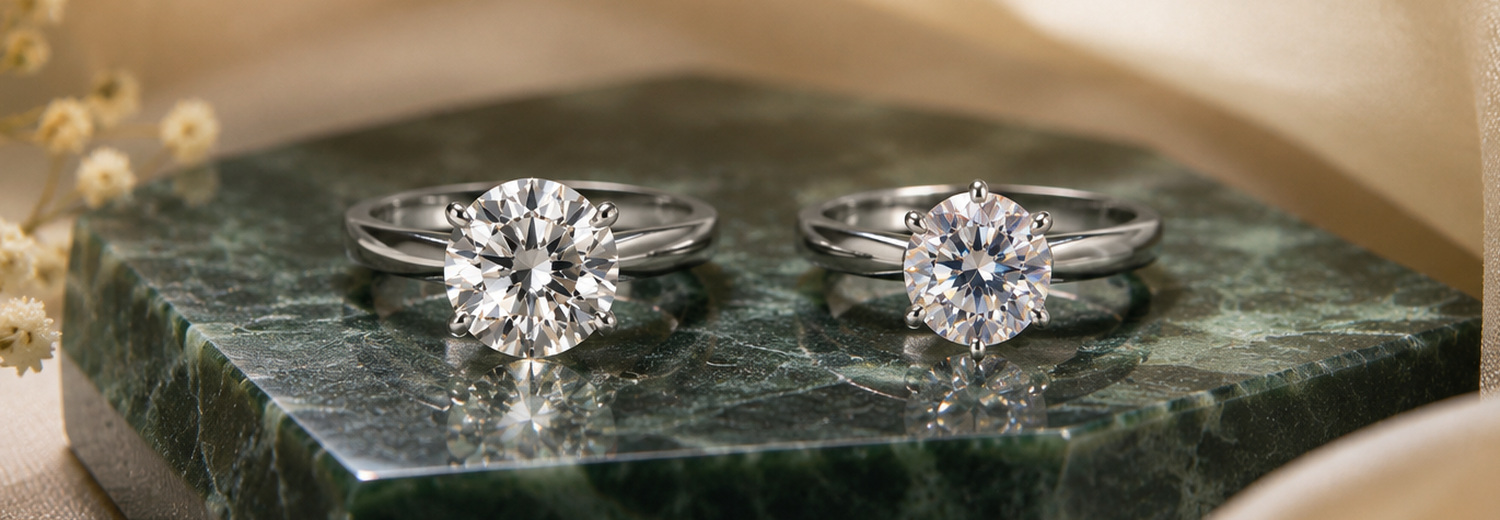
They can look similar at a glance, especially in a small stone or under jewelry-store lighting. With closer comparison, the way they reflect light can differ. GIA describes CZ as having somewhat different brilliance and color flashes from diamond. Size, cut and condition also change what you see, so a photograph is a poor identity test.
Daily wear is another consideration. A center stone on a ring encounters more contact than earrings do. Surface wear can change how a CZ stone looks over time. A diamond is harder, although its setting still needs care and a sharp blow can damage the stone. If you want a ring for frequent wear, compare the whole piece, including the setting, rather than treating hardness as the only decision.
For occasional jewelry, CZ may fit the look and budget you want. That is a valid preference when it is an informed choice. The problem arises when a seller describes a simulant in a way that makes it sound like diamond.
Why Is the Price Different?
They are different materials sold in different markets. A lab-grown diamond’s price can vary with carat weight, cut, color, clarity and the finished jewelry. CZ is usually much less expensive. A low price alone, however, cannot prove a stone is CZ, and a high price cannot prove it is diamond.
Compare a complete listing. Does the price include the setting? Is the stated carat weight for one stone or all stones? What metal is used? If the listing claims a lab-grown diamond, ask for the report information that supports that description. Candor’s complete ring buying guide explains how to compare the diamond and the ring as separate parts of the purchase.
How Can You Confirm What You Are Buying?
Read the material line first. “Cubic zirconia,” “CZ” and “diamond simulant” identify an imitation material. “Laboratory-grown diamond” identifies a diamond grown in a controlled setting. If the wording is unclear, ask the seller to state the stone’s material in writing.
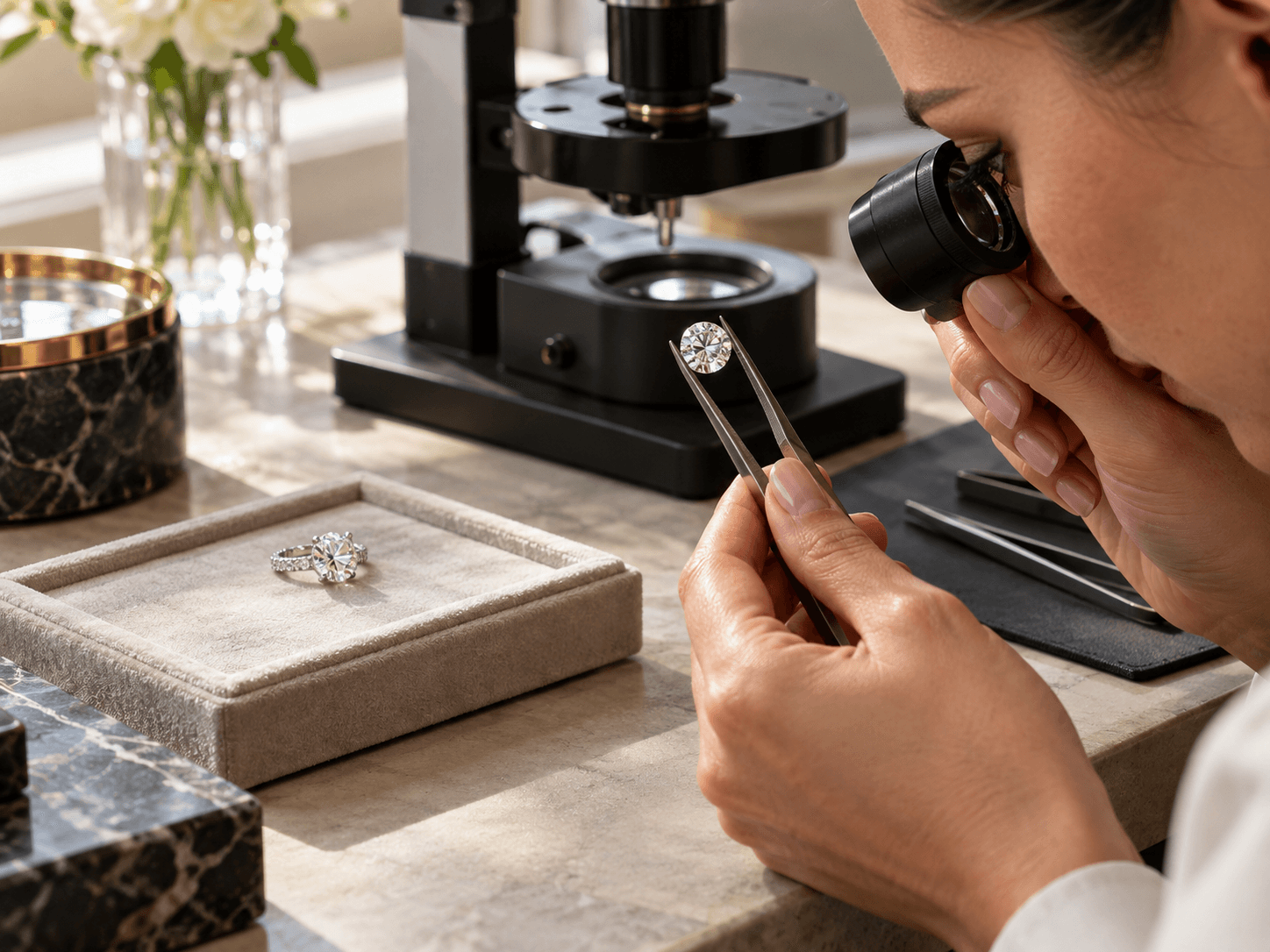
For a significant lab-grown diamond, an independent report can document its origin and characteristics. The IGI lab-grown report3 is one example. Verify the number through the issuing laboratory and check that the seller’s details match it. A report is especially helpful when you are comparing stones with different grades or prices.
Frequently Asked Questions
Is CZ a fake diamond?
CZ is a real material, but it is not diamond. It is a diamond simulant. It should be sold under its own name, not represented as a lab-grown diamond.
Is a lab-grown diamond the same as moissanite?
No. Moissanite is another material that can resemble diamond. Neither moissanite nor CZ is a lab-grown diamond. Candor’s real-diamond explainer covers these basic distinctions.
Can I use a basic tester to separate them?
A tester may help screen some simulants, but it is not a complete identity check. For a high-value purchase, rely on clear disclosure and independent documentation.
Which should I choose for earrings?
Choose according to the look, expected wear and amount you want to spend. If you pay for lab-grown diamonds, make sure the description and documentation support that claim. If you prefer CZ for occasional wear, the listing should say so plainly.
The next step is to compare pieces with the material clearly stated. Candor’s ring collection lets you review lab-grown options, but check each individual product’s stone and report details before ordering.