
What Does a Clarity Grade Measure?
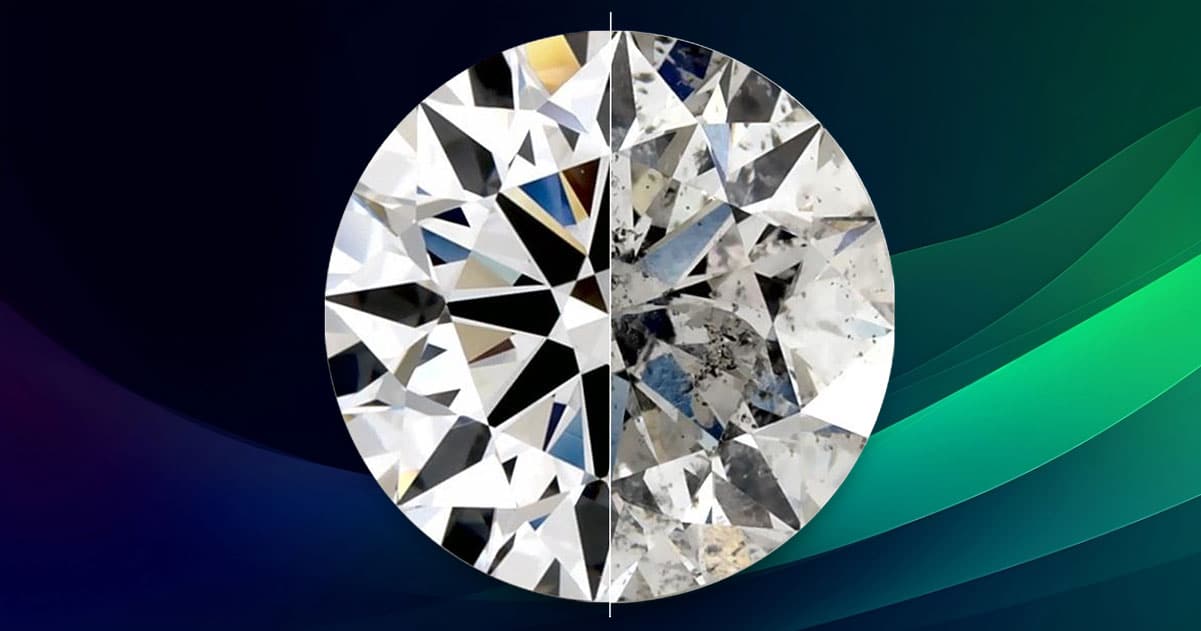
Clarity describes internal features, called inclusions, and surface features, called blemishes. A grader considers their size, number, position, nature and visibility. A grade summarizes those observations; it does not tell you exactly how the stone will look to your eye from every angle. GIA’s clarity explanation1 is a useful starting point.
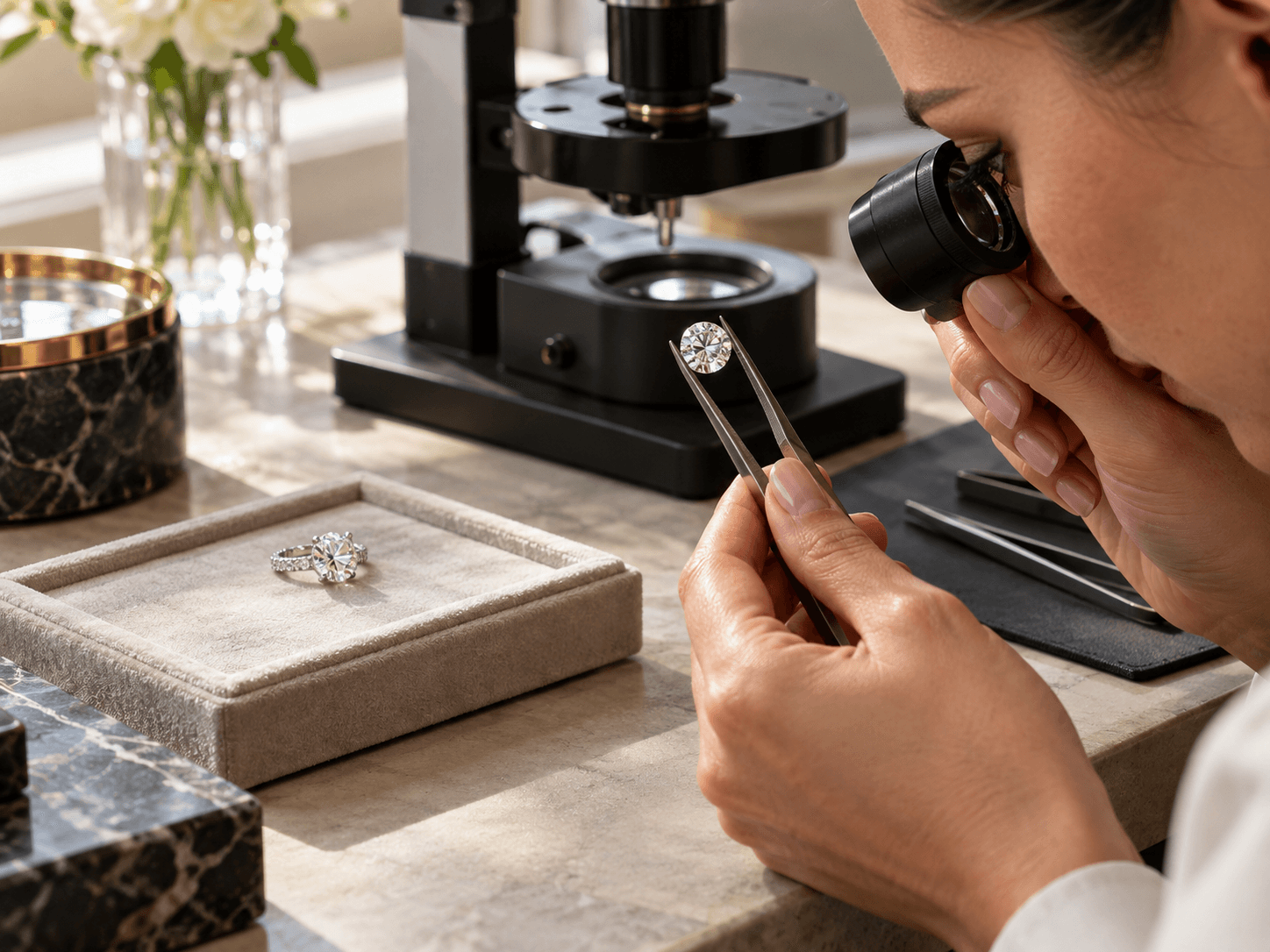
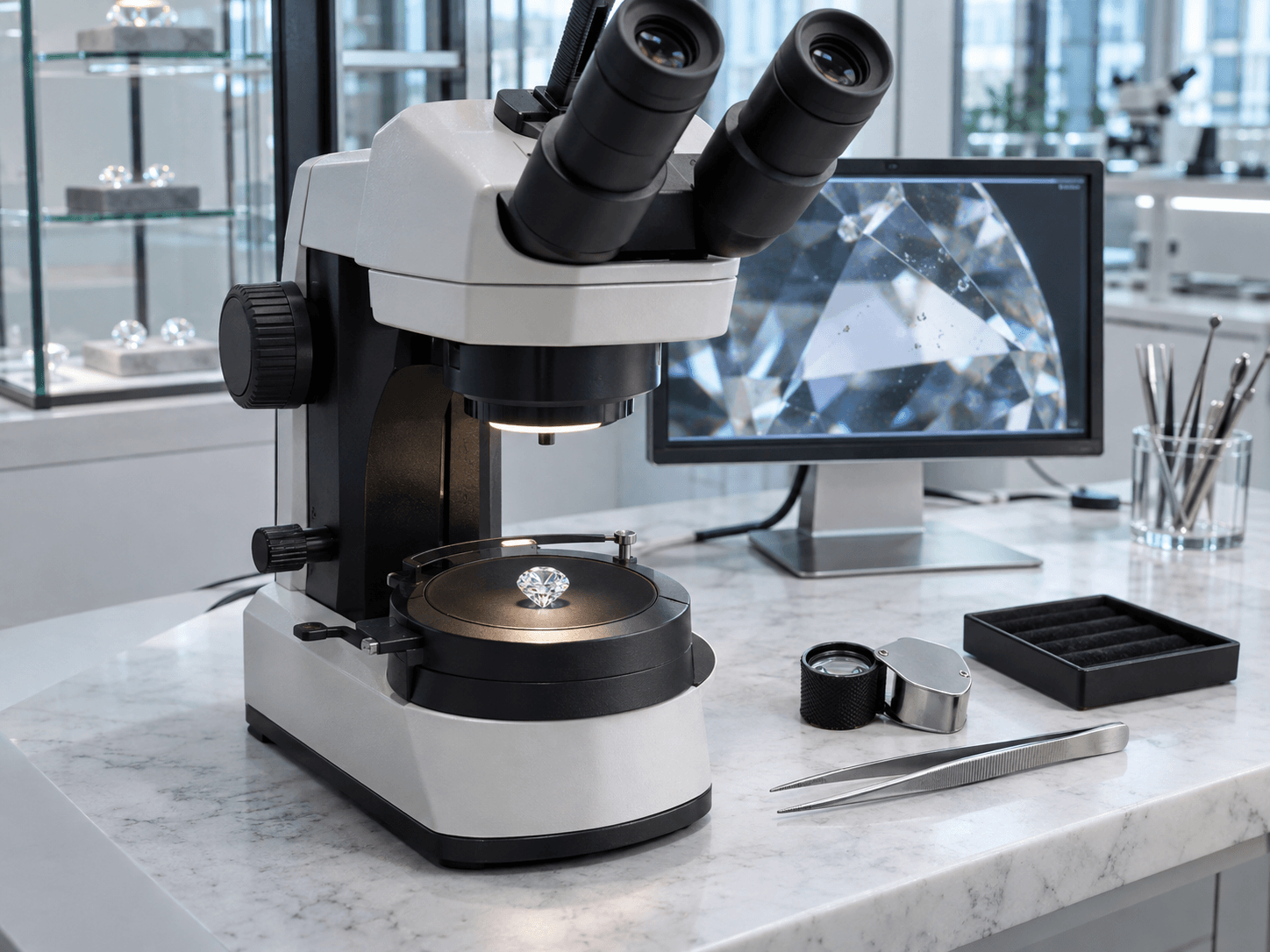
Many inclusions require magnification to see. Others can be noticeable without it, depending on the stone and lighting. A feature near the edge may matter less visually than a similar feature beneath the center. Facets can also reflect an inclusion and make it appear in more than one place.
This is why a grade is a filter, not a final verdict. Compare images or video of the actual diamond and, where possible, view it in person. Ask someone knowledgeable to point out any feature that could matter in everyday viewing.
Is a Higher Clarity Grade Always Better to Buy?
A higher clarity grade means fewer or less significant clarity features under the grading system used. It does not automatically mean the ring will look better to you. If two stones appear equally clean without magnification, compare their cut, shape, color and total price before spending more on the higher clarity label.
The phrase “eye-clean” can help in conversation, but it is not a universal laboratory grade. Ask what distance, lighting and viewing angle someone used when they say a stone is eye-clean. GIA’s clarity buying advice2 explains why visibility depends on the individual feature, not just the category printed on a report.
| What you notice | What to check |
| A spot near the center | Whether it is visible face-up without magnification |
| A feature near the edge | Whether the setting covers it and whether a professional sees durability concerns |
| Several mirrored spots | Whether facet reflections make one inclusion appear more prominent |
| No visible difference between two stones | Whether paying for the higher grade serves another preference you have |
Avoid turning this into an automatic rule such as “always buy VS1.” The right choice depends on the individual diamond and your tolerance for visible features.
Does Shape Change What You Can See?
It can. Step-cut diamonds, such as emerald cuts, have broad, open-looking facets that may make certain inclusions easier to notice. Brilliant-style cuts break up reflections differently and may mask some features. That is a tendency, not a guarantee for every stone.
Look at an emerald cut beside another emerald cut of similar size. Then compare a round beside a round. Comparing unrelated shapes from one image can make clarity differences hard to judge. Candor’s diamond shape guide can help you settle on the look first, then you can compare clarity within that shape.
Size matters too. A larger face can make some features easier to spot. A small stone can still have a noticeable inclusion if it sits in the wrong place. Use the carat number to narrow the search, then inspect the individual stone.
What Does the Report Actually Tell You?
Check which laboratory issued the report and what type of report it is. An IGI laboratory-grown diamond report3 may provide a clarity assessment along with origin and other characteristics. GIA’s current laboratory-grown services4 use different report formats and terminology from some earlier reports. Do not assume a grade from one issuer maps neatly to the wording on another document.
Verify the report number with the issuing lab. Then compare the report with the images and the seller’s description. If the report flags a feature you cannot locate, ask for help. If the listing claims a particular grade but the report does not provide it, request clarification before purchase.
How Should You Compare Two Stones?
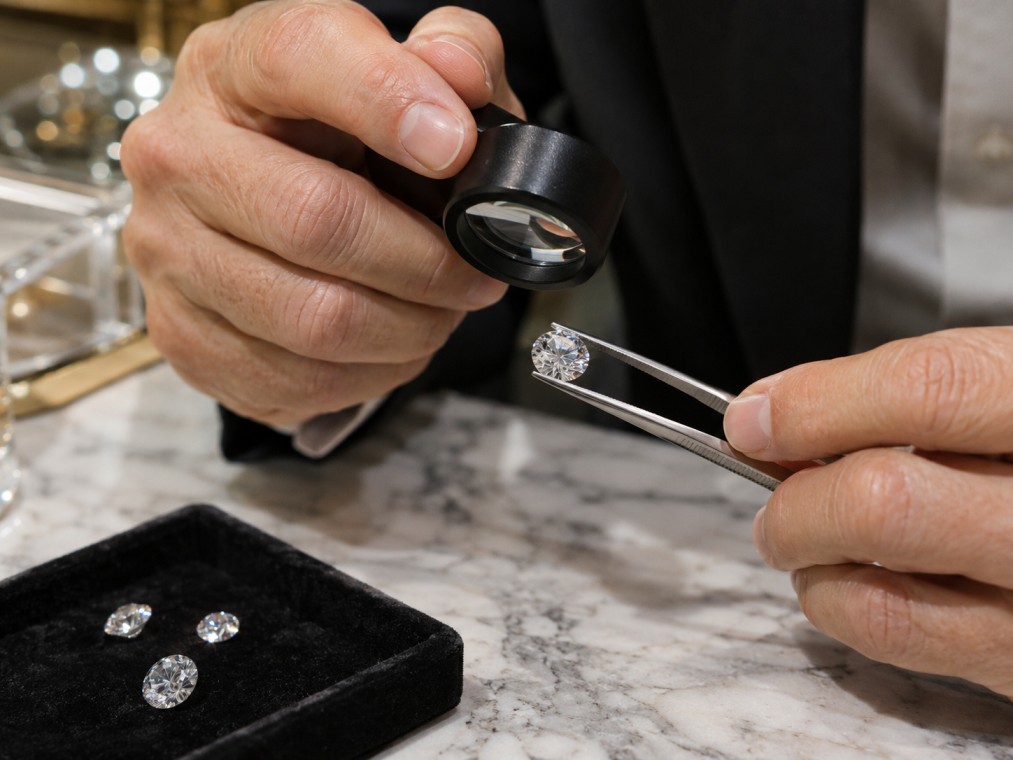
Start with the same shape and approximate size. Compare the report details, then view both stones under similar lighting. Look face-up first, as you would usually see them in a ring. Check whether any inclusion catches your attention without hunting for it. Only after that should you decide whether a higher grade is worth the extra cost.
If you are selecting a setting too, remember that the metal and design affect the finished ring’s look. A clarity upgrade that you cannot see may matter less to you than a setting you prefer. Candor’s ring collection is a place to compare complete designs as well as stones.
Frequently Asked Questions
Is VS clarity enough for a lab-grown diamond?
It may be, but the letters alone cannot answer. Check the exact stone for visible features, the report’s issuer and the price difference from alternatives.
Do I need a flawless lab-grown diamond?
Only if that precise certified grade matters to you and the price fits your priorities. Many buyers will not see a difference between a stone with that grade and a less expensive stone in ordinary viewing.
Can a lower clarity grade affect durability?
Some features may matter more to durability than others, especially if they reach the surface or sit near a vulnerable edge. Ask a qualified gemologist about the individual feature rather than assuming a grade alone answers the question.
Can I compare GIA and IGI grades directly?
Read the current report type and assessment language first. Report services differ, and GIA changed its lab-grown diamond services in 2025. Compare the actual stones and documentation, not just labels.
If you are weighing two clarity grades, a Candor virtual appointment can help you compare the actual stones instead of paying for letters you may never notice.